


Are smart blinds worth it in Australia?
Yes. In 2026, smart blinds are considered a high-value investment for Australian homeowners, primarily due to energy savings of up to 30% through automated thermal regulation. Beyond convenience, they offer enhanced home security, increased property resale value, and seamless integration with modern smart home ecosystems.
If you’re a Melbourne homeowner thinking about upgrading your window coverings, you’ve probably come across motorised or smart blinds and wondered whether they’re actually worth the cost.
They’re not just a tech upgrade—they’re a lifestyle upgrade. But like any investment in your home, the real question is: what do you get in return?
Let’s break it down properly—from energy savings and automation to resale value and real-world use in Melbourne homes.
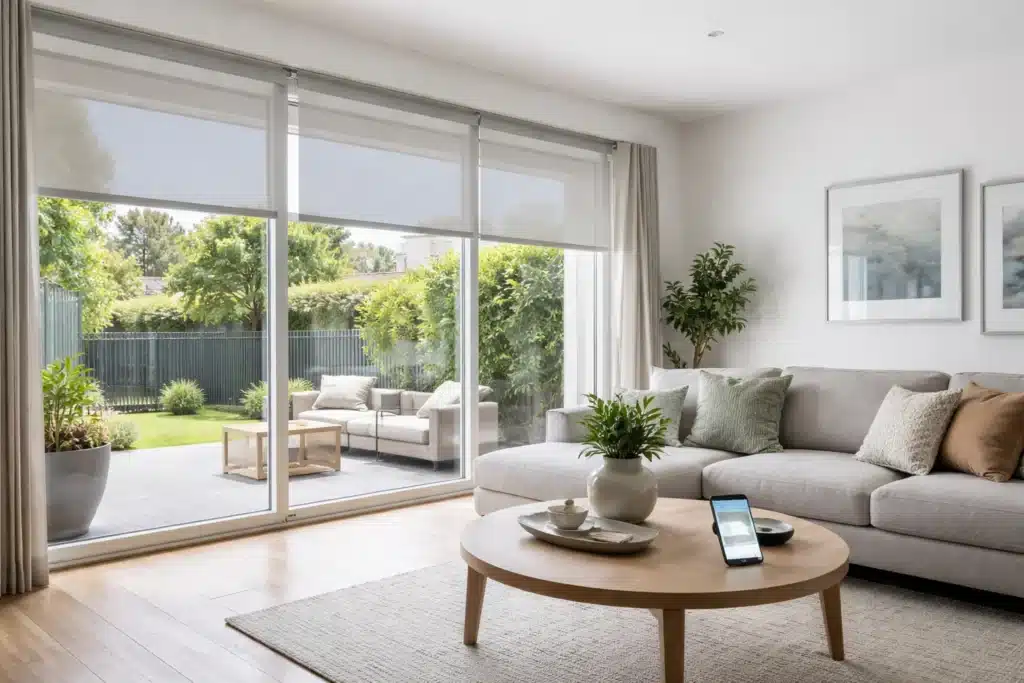
What Are Smart Blinds (and How Do They Work)?
Smart blinds—also known as motorised blinds or automated window treatments—are window coverings that can be controlled via:
- Smartphone apps
- Remote controls
- Voice assistants like Google Home
- Automated schedules and sensors
Instead of manually adjusting blinds throughout the day, smart systems do it for you.
For example:
- Open blinds automatically at sunrise
- Close them during peak afternoon heat
- Adjust based on room temperature or sunlight
This is where the real value starts to show—not just convenience, but intelligent control.
If you’re exploring options locally, solutions like motorised blinds in Melbourne are designed specifically for Australian homes and climate conditions.
Manual vs Smart Blinds: What’s the Real Difference?
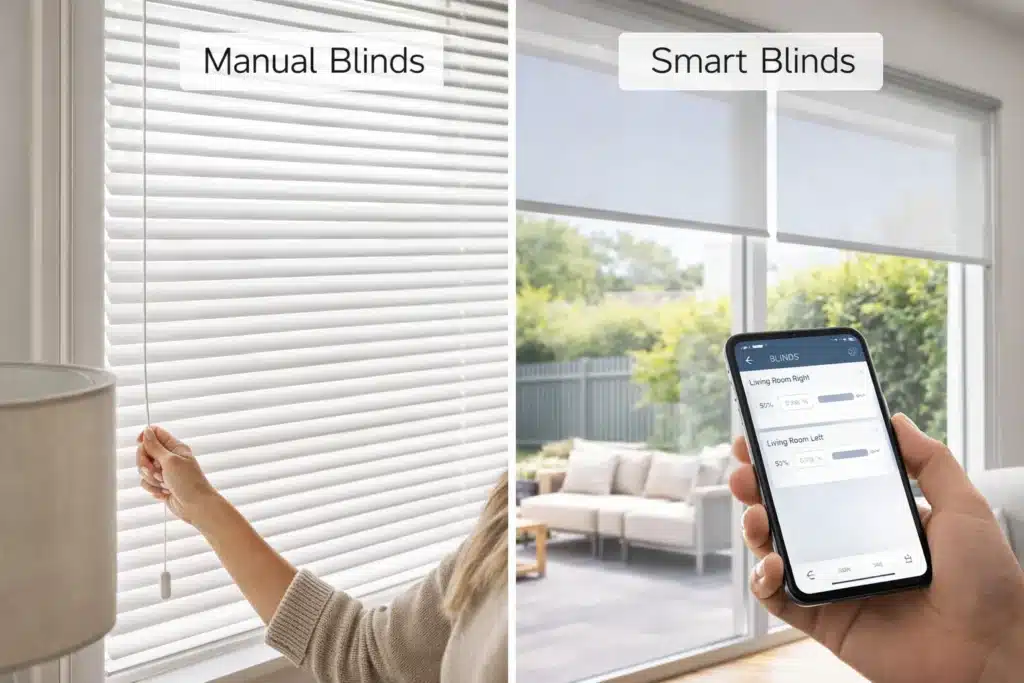
Let’s make this simple.
| Feature | Manual Blinds | Smart Blinds (2026) |
|---|---|---|
| Convenience | Low (Manual adjustment) | High (Voice, App, Automation) |
| Energy Saving | Reactive | Proactive (Sensor-driven) |
| Lifespan | High | High (Smooth motor operation) |
| Cost | Budget-friendly | Premium Investment |
| Security | Basic | Scheduled presence simulation |
| Smart Home Integration | None | Full integration |
Here’s the key takeaway:
Manual blinds respond to you.
Smart blinds anticipate your needs.
The Real Value: Smart Blind Energy Savings
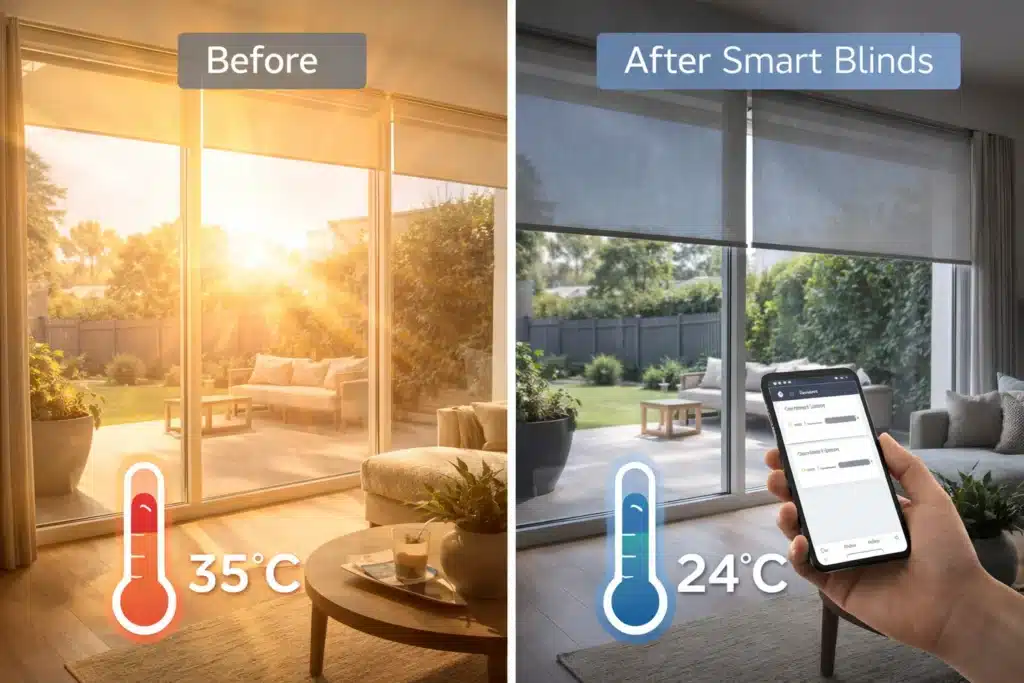
One of the biggest reasons homeowners ask “are smart blinds worth it in Australia?” is energy efficiency.
And this is where smart blinds really stand out.
How smart blinds save energy
Smart blinds use:
- Sunlight sensors
- Temperature data
- Scheduled automation
to adjust throughout the day.
This means:
- Closing blinds during hot afternoons to reduce heat gain
- Opening blinds in winter to capture natural warmth
- Reducing reliance on air conditioning and heating
According to energy efficiency research and Australian sustainability resources, windows are responsible for up to 40% of heat gain and loss in homes.
Smart blinds help control that.
Real-world example
Let’s say it’s a typical Melbourne summer day:
- 10:00 AM → Blinds open to let in light
- 2:00 PM → Blinds automatically close as temperatures rise
- Evening → Blinds reopen as the temperature drops
You don’t lift a finger—and your home stays cooler.
The Melbourne Factor: Why Smart Blinds Make Sense Locally
Melbourne weather is unpredictable. We all know the saying—four seasons in one day.
This is exactly where smart blinds shine.
Why they work so well in Melbourne
Smart blinds can:
- Respond to sudden temperature changes
- Adjust based on sunlight direction
- Optimise indoor comfort automatically
Example:
On a 35°C summer afternoon, smart blinds close before your home overheats.
On a cold winter morning, they open to let sunlight warm your space naturally.
This level of automation is especially useful in Melbourne homes with:
- Large windows
- Open-plan living areas
- North- or west-facing rooms
Convenience: The Lifestyle Upgrade You Notice Every Day
Energy savings are great—but let’s be honest.
The first thing you’ll notice is convenience.
Everyday benefits of smart blinds
- No more adjusting blinds room by room
- Control everything from your phone
- Set schedules once and forget about it
- Adjust blinds without getting out of bed
On the other hand…
It’s not just about comfort—it’s about time saved daily.
Over months and years, that convenience becomes part of your routine.
Smart Home Integration: Where Things Get Interesting
Smart blinds don’t operate in isolation—they’re part of a larger ecosystem.
Platforms like Google Home allow you to connect:
- Lighting
- Air conditioning
- Security systems
- Window coverings
Example automation setup
- Blinds close + lights turn on at sunset
- Blinds open + heating adjusts in the morning
- Blinds close automatically when you leave home
This level of integration creates a fully connected home environment.
Do Smart Blinds Increase Property Value?
Here’s something many homeowners overlook.
Smart blinds can contribute to higher perceived property value.
Why?
Because buyers today are looking for:
- Smart home features
- Energy-efficient upgrades
- Move-in ready homes
Installing automated window treatments signals that your home is:
- Modern
- Efficient
- Future-ready
In competitive Melbourne suburbs, these features can help your property stand out.
Design Trends: Smart Blinds in Modern Homes (2026)
Interior design trends in Australia are shifting toward:
- Clean lines
- Minimal clutter
- Integrated technology
Smart blinds fit perfectly into this.
Popular styles include:
- Roller blinds with hidden motors
- Dual blinds (blockout + sheer)
- Neutral tones like white, grey, and beige
Motorised blinds also remove the need for chains and cords, creating a cleaner, safer look—especially important for families.
Pros and Cons of Smart Blinds
Let’s be honest—smart blinds aren’t perfect for everyone.
Pros
- Automated convenience
- Energy efficiency
- Smart home integration
- Increased property appeal
- Safer (no cords)
Cons
- Higher upfront cost
- Requires setup and configuration
- May need occasional maintenance
Here’s the catch:
The value of smart blinds depends on how much you’ll actually use the automation.
For most homeowners, once installed, they quickly become essential.
Are Smart Blinds Worth the Cost?
Smart blinds are a premium investment, but they offer long-term returns.
What you’re really paying for:
- Automation technology
- Energy savings
- Convenience
- Modern home appeal
Over time, savings on energy bills and improved comfort can offset the initial cost.
If you’re already considering upgrading window coverings, moving to smart blinds instead of manual ones can be a smart long-term decision.
Best Rooms for Smart Blinds
Not every room needs automation.
Living Rooms
- Ideal for large windows
- Benefit most from energy savings
Bedrooms
- Automate wake-up routines
- Combine with blockout blinds
Home Offices
- Reduce glare on screens
- Improve productivity
Hard-to-Reach Windows
- Perfect for high or awkward spaces
Smart Blinds vs Plantation Shutters: Which Is Better?
Both options add value—but in different ways.
Smart Blinds
- Best for automation
- Ideal for modern homes
- Great for energy efficiency
Plantation Shutters
- Best for timeless design
- Add architectural value
- Long lifespan
Many Melbourne homes combine both.
Choosing the Right Smart Blinds in Melbourne
If you’re considering smart blinds, here’s what to think about.
1. Control System
- App-based control
- Voice integration
- Remote control
2. Power Source
- Battery-powered
- Hardwired
- Solar-powered
3. Fabric Type
- Blockout
- Sunscreen
- Light-filtering
4. Professional Installation
Proper installation ensures:
- Smooth operation
- Longer lifespan
- Better performance
Working with experienced providers like Complete Blinds Melbourne ensures the system is tailored to your home.
Practical Tips for Melbourne Homeowners
Use automation strategically
Focus on:
- West-facing windows
- Rooms that overheat
- Large glass areas
Combine manual and smart solutions
You don’t need automation everywhere.
Think long-term
Smart blinds are not just a purchase—they’re an upgrade to how your home functions.
Conclusion
So, are smart blinds worth it in Australia in 2026?
For most homeowners—especially in Melbourne—the answer is yes.
They offer:
- Real energy savings
- Everyday convenience
- Smart home integration
- Improved property appeal
While the upfront cost is higher, the long-term benefits make smart blinds a future-focused investment.
In a world where homes are becoming smarter, more efficient, and more connected, smart blinds are no longer a luxury—they’re quickly becoming the standard.
FAQs
Yes. Smart blinds offer energy savings, convenience, and smart home integration, making them a valuable investment for modern Australian homes.
Smart blinds can reduce energy usage by up to 30% by controlling heat gain and loss through windows.
Yes. Many smart blinds integrate with platforms like Google Home, allowing voice control and automation.
They are more expensive than manual blinds, but they provide long-term benefits such as energy savings and convenience.
Yes. Smart home features, including automated blinds, can improve buyer appeal and increase perceived property value.
Absolutely. Melbourne’s changing weather makes smart blinds particularly useful for maintaining indoor comfort throughout the year.


