


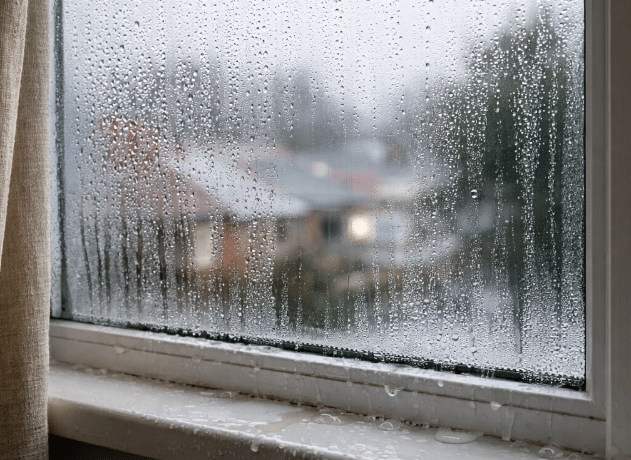
If you’ve ever woken up on a cold Melbourne morning and found your windows covered in moisture, you’re not alone. During July and August, window condensation becomes a daily frustration in many Victorian homes—especially older properties with single glazing.
It’s not just a cosmetic issue. Over time, condensation can lead to:
- Mould growth
- Damaged timber frames
- Peeling paint
- Poor indoor air quality
So the real question is:
How do you actually stop window condensation in winter—properly, not just temporarily?
Key Takeaways
The best way to stop window condensation in winter is to install thermal blinds such as honeycomb or blockout blinds. These blinds create an insulating barrier between warm indoor air and cold window glass, reducing moisture buildup and improving energy efficiency in Melbourne homes.
Quick Overview
To stop window condensation in winter:
- Install thermal blinds (honeycomb or blockout)
- Improve ventilation
- Reduce indoor humidity
- Maintain consistent heating
👉 Best solution: Honeycomb blinds due to superior insulation.
Why Window Condensation Happens (And Why It’s Worse in Melbourne)
Let’s break it down simply.
Condensation forms when:
- Warm indoor air holds moisture
- That air touches cold glass
- The moisture turns into water droplets
This is especially common in Melbourne because:
- Nights are cold in winter
- Homes are heated inside
- Many houses have older windows
- Insulation is often limited
According to energy efficiency guidelines for Australian homes (YourHome.gov.au), windows are one of the biggest sources of heat loss—making them a key contributor to condensation.
The Real Problem: Cold Glass Meets Warm Air
Here’s what most people miss:
👉 Condensation isn’t the problem—it’s the symptom.
The real issue is the temperature gap between:
- Warm indoor air
- Cold window glass
When these meet, moisture forms instantly.
So instead of wiping your windows every morning, the goal is to:
👉 Reduce that temperature difference
And that’s exactly what thermal blinds do.
How Thermal Blinds Stop Window Condensation
Thermal blinds work by creating a protective insulation layer between your room and your window.
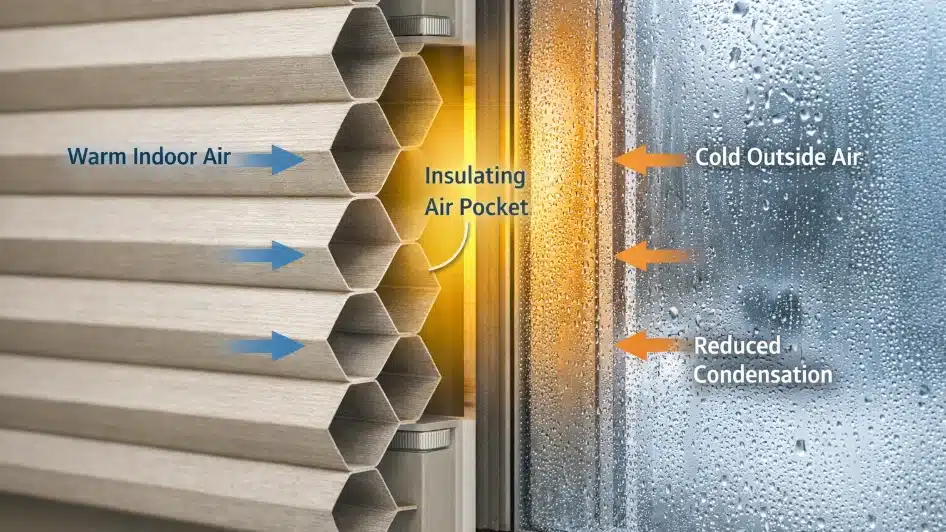
Instead of warm air hitting cold glass, it hits the blind surface—which stays closer to room temperature.
This helps to:
- Reduce condensation buildup
- Minimise heat loss
- Improve indoor comfort
- Block cold drafts
In simple terms:
👉 Less temperature difference = less condensation
Best Thermal Blinds for Preventing Condensation
Not all window coverings are created equal. If your goal is to stop window condensation in winter, you need the right type of blinds.
1. Honeycomb (Cellular) Blinds – The Most Effective Solution
Honeycomb blinds are widely considered the best blinds for condensation control.
They feature a unique cellular design that traps air inside pockets—creating a strong thermal barrier.
Why they work so well:
- Air pockets provide insulation
- Reduce heat transfer through glass
- Keep the inner surface warmer
- Prevent moisture from forming
Best for:
- Bedrooms
- Living rooms
- South-facing windows
- Homes with heavy condensation
If you’re exploring thermal honeycomb blinds for insulation, options like
👉 https://www.completeblinds.com.au/honeycomb-blinds/
are specifically designed for Melbourne conditions.
2. Blockout Roller Blinds – A Practical Alternative
Blockout roller blinds are a more affordable option that still helps reduce condensation.
How they help:
- Create a barrier between air and glass
- Reduce drafts
- Improve insulation when tightly fitted
Best for:
- Bedrooms
- Budget-friendly upgrades
- Rental properties
For modern interiors, many homeowners choose
👉 https://www.completeblinds.com.au/roller-blinds/
for a clean, minimal look.
Honeycomb vs Blockout Blinds (Side-by-Side Comparison)
| Feature | Honeycomb Blinds | Blockout Roller Blinds |
|---|---|---|
| Insulation | Excellent | Moderate |
| Condensation Control | High | Moderate |
| Energy Efficiency | High | Medium |
| Style | Soft, modern | Minimal, sleek |
| Cost | Higher | More affordable |
| Best Use | Whole home | Bedrooms |
Here’s the catch:
If condensation is severe, honeycomb blinds are the more effective long-term solution.
Additional Ways to Reduce Window Condensation
Thermal blinds are powerful—but combining them with these strategies gives the best results.
Improve Ventilation
Moisture builds up quickly in sealed homes.
Try:
- Opening windows briefly each morning
- Using exhaust fans in bathrooms and kitchens
- Letting fresh air circulate daily
Reduce Indoor Humidity
Too much moisture indoors increases condensation.
Simple fixes:
- Use a dehumidifier
- Avoid drying clothes inside
- Keep lids on pots when cooking
Maintain Consistent Heating
Sudden temperature changes make condensation worse.
Instead:
- Keep heating steady
- Avoid extreme fluctuations
Why Thermal Blinds Are a Smart Investment
Stopping condensation is just one benefit.
Thermal blinds also improve:
1. Energy Efficiency
They reduce heat loss through windows—one of the biggest energy leaks in homes.
This can lower heating costs during winter.
2. Comfort
Rooms feel:
- Warmer
- Less drafty
- More stable in temperature
3. Property Appeal
Energy-efficient upgrades are increasingly attractive to buyers.
Local experts like
👉 https://www.completeblinds.com.au
recommend thermal blinds as a practical solution for both comfort and value.
Design Trends: Thermal Blinds That Still Look Stylish
Let’s be honest—no one wants bulky, outdated window coverings.
The good news?
Modern thermal blinds are designed to be both functional and stylish.
Popular trends in Melbourne include:
- Neutral tones (white, beige, grey)
- Slimline honeycomb designs
- Minimalist roller blinds
Design platforms like modern window treatment trends (Houzz) also highlight thermal blinds as a growing interior trend.
Smart Home Integration
Thermal blinds can also be part of a smart home system.
With motorised options, you can:
- Close blinds automatically at sunset
- Open them during sunny winter mornings
- Improve insulation without thinking about it
Systems like
👉 https://home.google.com
allow integration with smart devices for automated comfort.
Choosing the Right Thermal Blinds for Your Home
Here’s how to choose based on your situation.
Heavy Condensation Problem
Go with:
- Honeycomb blinds
- Double-cell design
- Tight installation
Bedrooms
Choose:
- Blockout roller blinds
- Or combine with honeycomb blinds
Living Areas
Best options:
- Light-filtering honeycomb blinds
- Shutters + blinds combination
Budget-Friendly Fix
Start with:
- Blockout blinds
- Focus on the worst-affected rooms
Common Mistakes to Avoid
Even good blinds won’t work if installed incorrectly.
Avoid:
- Leaving gaps around edges
- Choosing non-thermal fabrics
- Ignoring ventilation
Proper installation is critical for performance.
Real Melbourne Scenario
Let’s break it down with a real example.
Before:
- Cold bedroom
- Wet windows every morning
- High heating costs
After installing thermal blinds:
- Reduced condensation
- Warmer room overnight
- Less moisture damage
This is why many homeowners see thermal blinds as a long-term solution—not just a quick fix.
Conclusion
So, how do you stop window condensation in winter?
👉 You don’t just wipe it—you prevent it.
Thermal blinds, especially honeycomb blinds, work by:
- Creating an insulating barrier
- Reducing temperature differences
- Preventing moisture buildup
In Melbourne’s cold winters, they’re one of the most effective ways to improve comfort, protect your home, and reduce energy costs.
If you’re tired of waking up to wet windows, upgrading to thermal blinds could completely change how your home feels this winter.
FAQs
Condensation forms when warm, moist indoor air meets cold window glass, causing water droplets to form.
Yes, thermal blinds reduce condensation by insulating the window and preventing warm air from contacting cold glass.
Yes, honeycomb blinds offer the highest insulation and are the most effective for reducing condensation.
Yes, long-term condensation can cause mould, wood rot, and paint damage.
Yes, short bursts of ventilation help reduce moisture and prevent condensation buildup.
Absolutely. They improve insulation, reduce condensation, and increase comfort during winter.


