


Quick Verdict: Replacing single glass with double glazing can cost $20,000–$40,000+ and often requires major structural work. Custom-fitted double-cell honeycomb blinds create sealed static air pockets over single-glazed windows, delivering strong thermal resistance at roughly 15–20% of the cost, making cellular shades a practical thermal retrofit for Melbourne winters.
For homeowners comparing honeycomb blinds vs double glazing Melbourne, the real question is not which option sounds more premium. The real question is which upgrade delivers the best comfort improvement for the money, with the least disruption to the home.
Across Melbourne, thousands of houses still rely on single-glazed aluminium or timber windows. Many of these windows perform poorly in winter. The glass feels cold to touch. Rooms lose warmth quickly after the heater switches off. Condensation forms on the inside surface. Cold air seems to fall from the window even when the frame looks closed.
Double glazing can solve part of that problem. However, full window replacement often costs tens of thousands of dollars, creates building disruption and can be difficult in heritage homes, rentals or strata properties.
Honeycomb blinds offer a different path.
They do not replace the glass. Instead, they improve the thermal behaviour of the window from the room side. When custom-made and tightly fitted, cellular shades create trapped air pockets that reduce heat transfer and slow cold downdraughts.
For many Melbourne homes, that makes honeycomb blinds the strongest cheaper alternative to double glazing.
The Melbourne Glazing Crisis: Why Your Windows Feel Like Ice
Melbourne’s housing stock includes a large number of single-glazed homes.
You see them everywhere: post-war brick houses in the eastern suburbs, weatherboard homes in Ringwood and Croydon, Edwardian terraces in inner suburbs, aluminium-framed units, older apartments, and rental properties where windows have never been thermally upgraded.
In winter, these windows act like thermal drains.
Warm indoor air moves towards the cold glass surface. Heat passes through the glass by conduction. At the same time, the cold window surface cools the air beside it. That cooled air drops towards the floor and creates a draught-like movement inside the room.
This is convection.
Many homeowners think the window is leaking air. Sometimes it is. But even a closed single-glazed window can create a cold downdraught because the glass surface becomes so cold.
Radiation also matters.
Your body loses heat towards cold surfaces nearby. That is why sitting near an uncovered single-glazed window can feel uncomfortable, even if the room temperature on the thermostat looks acceptable.
This is the central problem behind honeycomb blinds vs double glazing Melbourne searches.
People want warmer rooms, lower bills and less condensation. Yet they do not always have the budget, permission or appetite for full glazing replacement.
The Double Glazing Reality Check: Cost, Mess and Payback
Double glazing improves the window assembly itself.
A double-glazed unit uses two panes of glass separated by an air or gas-filled gap. This gap reduces heat transfer compared with single glass. Better frames, low-e coatings and warm-edge spacers can further improve performance.
Technically, double glazing is a strong upgrade.
Financially, it can be difficult.
Retrofit double glazing in Melbourne commonly becomes a major project, especially if the existing frames need replacement. Costs can vary widely depending on window size, frame material, access, glass specification and installation complexity. For many homes, a full upgrade can easily reach $25,000 or more.
Large sliding doors, second-storey windows, custom shapes and premium frame systems can push the figure much higher.
The hidden friction can also surprise homeowners.
You may need scaffolding. Trades may need to remove architraves. Plaster repairs may follow. Paint touch-ups may become necessary. In older timber homes, rotten frames can trigger additional carpentry work. Heritage overlays may also restrict what can be changed on the front facade.
Landlords face another issue.
A full glazing upgrade may not make financial sense if the property is an investment and the payback period stretches across decades. In some homes, double glazing may take 20–30 years to repay itself through energy savings alone.
That does not mean double glazing is a bad choice.
It means homeowners need to compare the cost against other retrofit window insulation Melbourne options. Honeycomb blinds sit high on that list because they improve comfort without major building work.
How Honeycomb Blinds Work as Fabric Double Glazing
Honeycomb blinds are often described as cellular shades.
The name comes from their structure. Instead of using flat fabric, the blind forms a series of cells. These cells create pockets of trapped air across the window.
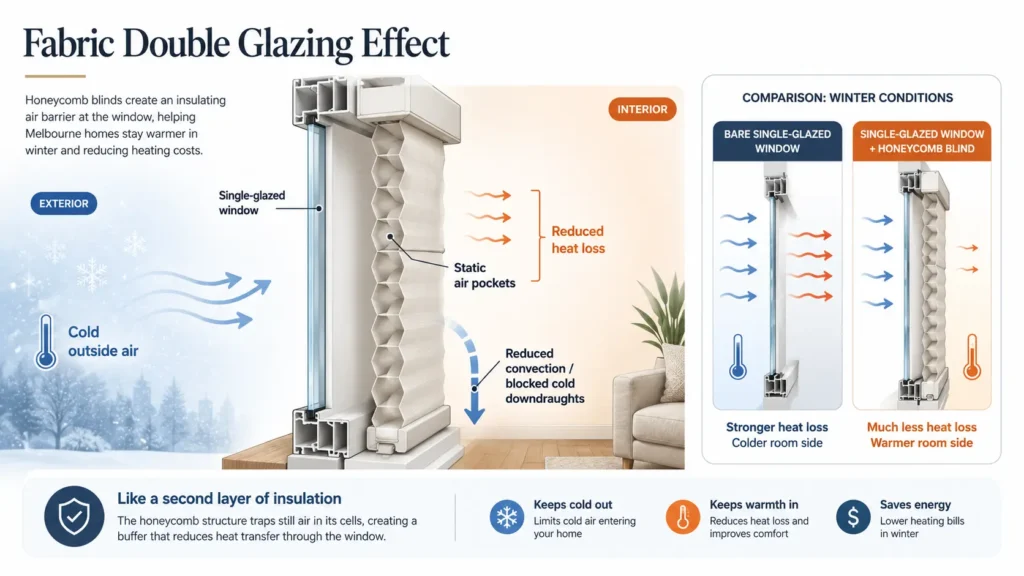
That trapped air is the key.
Still air resists heat movement. It slows conduction and reduces air circulation between the cold glass and the warmer room. In simple terms, honeycomb blinds add an insulating air layer on the inside of the window.
This is why many building performance specialists call them a form of “fabric double glazing”.
They do not perform exactly like sealed glass units. However, they use a similar principle: a static air pocket improves thermal resistance.
For Melbourne winters, that can make a noticeable difference.
A well-fitted honeycomb blind can make the window zone feel less cold. It can reduce heat loss through single glass. It can also slow the cold air movement that makes bedrooms, studies and living rooms uncomfortable at night.
Single-Cell vs Double-Cell Honeycomb Blinds
Not all honeycomb blinds perform the same way.
Single-cell honeycomb blinds use one row of air pockets. They offer good insulation, a slim profile and a clean appearance.
Double-cell honeycomb blinds use two layers of cells. This creates more trapped air, more fabric structure and stronger insulation potential.
For homeowners comparing cellular shades vs double glazing cost, double-cell construction often makes the most sense for cold rooms, bedrooms, south-facing spaces and older homes with single glazing.
Norman Honeycomb Blinds are a strong option for homeowners who want a high-performance cellular solution with a refined finish. They suit Melbourne homes where insulation, privacy and light control all matter.
Fabric choice still matters.
Light-filtering honeycomb blinds can soften daylight and improve privacy. Blockout honeycomb blinds provide stronger night-time privacy and better sleep conditions. For bedrooms, nurseries and home offices, blockout cellular fabrics usually offer the best comfort outcome.
Why Honeycombs Outperform Flat Blinds for Static Insulation
Flat window coverings can still help with comfort.
For example, blockout roller blinds provide privacy, room darkening and some thermal benefit. They work well in bedrooms, media rooms and modern interiors.
However, standard roller blinds are flat fabric systems. Unless they have pelmets, side channels or tight face-fit coverage, air can move around the fabric.
That air movement reduces insulation.
Plantation Shutters can also improve thermal comfort. Their solid louvred panels create a dead-air zone in front of the glass, especially when the frame fits tightly.
Shutters are durable, practical and excellent for moisture-prone areas.
Even so, honeycomb blinds usually lead internal window coverings for static thermal resistance because their cellular structure traps air across the entire blind surface.
The design itself is built for insulation.
That is why the best blinds for single glazed windows Melbourne homeowners choose are often cellular, particularly for winter warmth.
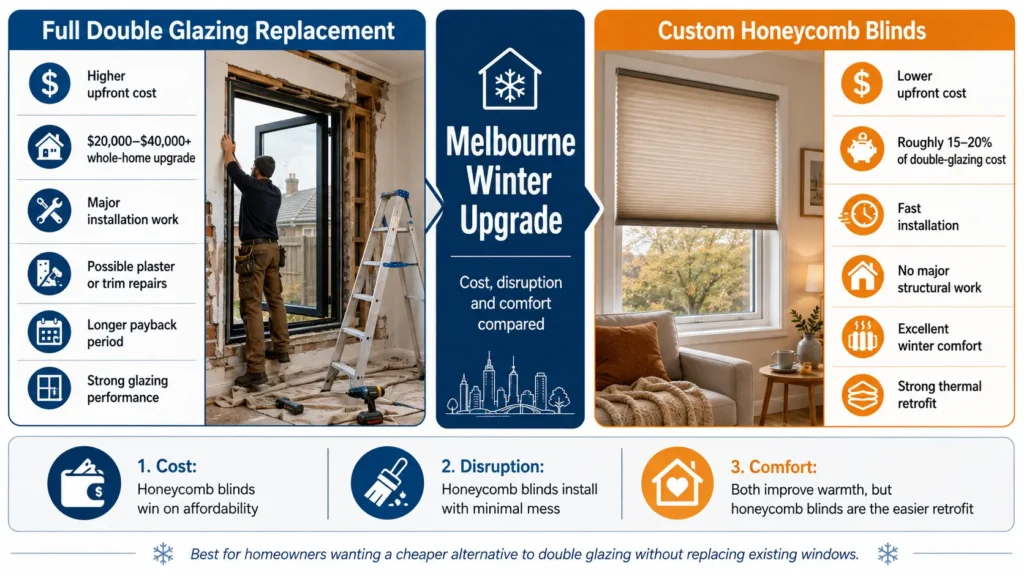
Comparison of double glazing replacement and honeycomb blinds
Technical Head-to-Head: Honeycomb Blinds vs Double Glazing Melbourne
| Performance Factor | Double Glazing Replacement | Custom Honeycomb Blinds |
|---|---|---|
| Cost per Average Window | Often $1,200–$2,000+ per m² depending on frame, glass, access and labour | Usually much lower, often around 15–20% of full replacement cost across a home |
| Whole-Home Project Cost | Commonly $20,000–$40,000+ for many Melbourne homes | Usually far more affordable for staged upgrades |
| R-Value / Thermal Boost | Improves the glass and frame assembly directly | Adds a high-resistance insulating air layer inside the room |
| Installation Time | Can take days or weeks depending on scope | Usually fast, room-by-room installation |
| Structural Disruption | High if frames, architraves or plaster need work | Low, with no glass removal required |
| Winter Comfort | Excellent when specified and installed well | Very strong, especially on single-glazed windows |
| Summer Heat Rejection | Good with low-e glass and correct SHGC selection | Moderate internally; works best when paired with external shading |
| Acoustic Performance | Strong improvement, especially with laminated glass | Mild to moderate improvement by softening the window zone |
| Condensation Control | Can reduce condensation by warming the internal glass surface | Can reduce room-side cold discomfort but may trap moisture if ventilation is poor |
| Heritage Compatibility | May be restricted by overlays or facade rules | Highly compatible because original windows remain in place |
| Rental Compatibility | Usually impractical unless landlord-funded | More practical for landlords and long-term tenants |
| Payback Period | Often long if judged only by energy savings | Shorter comfort return due to lower upfront cost |
| Visual Impact | Changes window frames and sometimes facade appearance | Keeps existing windows while improving interior comfort |
Cost Reality: Cellular Shades vs Double Glazing Cost
The cost gap explains why honeycomb blinds have become such a practical retrofit option.
Double glazing changes the building fabric. That means glass, frames, labour, access, sealing and finishing. In many Melbourne homes, the price rises quickly because each window has different dimensions and site conditions.
Honeycomb blinds change the internal thermal layer.
They need accurate measuring, good fabric selection and proper installation, but they do not require structural removal. That keeps disruption low and allows homeowners to upgrade room by room.
For example, a homeowner might start with:
- Main bedroom
- Children’s bedrooms
- Home office
- Cold south-facing living room
- Large single-glazed windows
This staged approach works well for households managing rising heating costs.
Rather than waiting years to afford full glazing replacement, you can improve the worst rooms first.
That is why honeycomb blinds are often the best cheaper alternative to double glazing for practical Melbourne households.
The Layered Super-Insulation Strategy
The strongest retrofit result comes from layering.
A single-glazed window with a custom honeycomb blind already performs better than bare glass. However, adding curtains can improve comfort further.
A high-performance layered setup may include:
- Existing single glazing
- Inside-mount double-cell honeycomb blinds
- Floor-to-ceiling S-Fold blockout curtains
- A ceiling-mounted or recessed track
- Generous curtain fullness
- Tight side and top coverage
This approach creates multiple insulating zones.
The honeycomb blind traps air close to the glass. The curtain adds another soft thermal layer in front. Together, they reduce radiant cold, slow convection and improve the comfort of the entire room.
Layered modern curtains in Melbourne also add acoustic softness.
That matters in homes with timber floors, large windows and open-plan layouts. The room does not only feel warmer. It can feel quieter and more settled.
For homeowners trying to approach 7-Star comfort without replacing every frame, this layered strategy can deliver strong practical performance.
It also looks more refined than a purely technical solution.
Best Applications Across Melbourne Microclimates
Melbourne does not have one climate experience.
A house in the Dandenong foothills may feel colder and damper than an apartment in Southbank. A heritage terrace in Carlton may have draughty timber windows. A Ringwood family home may have large aluminium sliders. A bayside property may need both winter insulation and summer glare control.
Honeycomb blinds suit many of these conditions.
In cold exposed outer suburbs, double-cell cellular shades can improve night-time warmth in bedrooms and living rooms.
In inner-suburb heritage homes, honeycombs can preserve original windows while improving comfort from the inside.
For rental properties, they provide a non-structural upgrade that can improve tenant comfort without major building work.
In apartments, honeycomb blinds can reduce discomfort around large glass panels where owners cannot alter the external facade.
This flexibility makes them a powerful retrofit window insulation Melbourne option.
Condensation: What Honeycomb Blinds Can and Cannot Do
Condensation appears when warm moist indoor air meets a cold surface.
Single-glazed windows often create condensation because the internal glass surface becomes cold overnight. Bedrooms are especially prone because people breathe moisture into the room while sleeping.
Honeycomb blinds can improve comfort near the window, but they do not remove moisture from the air.
In some cases, a tightly sealed blind can reduce air movement across the glass. That may help the room feel warmer, but moisture can still form on the glass if humidity remains high.
Therefore, condensation control needs a broader approach.
Use exhaust fans. Ventilate when practical. Avoid drying clothes indoors without airflow. Open blinds during the day to allow the glass area to dry. In damp rooms, consider whether another product or ventilation upgrade is required.
Honeycomb blinds support thermal comfort.
They are not a substitute for moisture management.
The Ringwood Precision Advantage: Stopping Convection Currents
Thermal insulation fails at the perimeter.
A honeycomb blind with great fabric but poor fit will not perform properly. If cold air can bypass the blind through side gaps, the room still feels draughty.
This is where off-the-shelf honeycomb blinds often fail.
Standard sizes rarely match real Melbourne windows. Older timber frames may sit out of square. Aluminium reveals can vary. Renovated homes may have mixed window depths from room to room.
A few millimetres can matter.
Cold air follows gaps. Warm air escapes through gaps. Light leaks through gaps. Over time, the homeowner feels the weakness, even if the blind looks acceptable from a distance.
Complete Blinds manufactures through our Ringwood factory-direct process, allowing cellular shades to be custom-crafted to millimetre tolerances.
That means better control over:
- Recess fit
- Fabric width
- Top rail position
- Bottom rail alignment
- Side coverage
- Track options
- Blockout performance
- Top-down/bottom-up operation
- Room-by-room climate management
Side-guided track options can improve performance further by reducing edge leakage. Top-down/bottom-up controls also allow homeowners to manage privacy, daylight and heat more precisely.
For example, you can lower the top of the blind to admit daylight while keeping the lower section covered for privacy and warmth.
That level of control is difficult to achieve with generic blinds.
Honeycomb Blinds vs Double Glazing Melbourne: Which Should You Choose?
Choose double glazing if you are already replacing windows, rebuilding, renovating heavily or repairing failing frames.
If the existing windows are rotten, unsafe, poorly sealed or structurally damaged, new glazing may make sense. Double glazing also offers strong acoustic benefits and can improve the value and performance of the building fabric.
Choose honeycomb blinds if you want a faster, lower-cost thermal upgrade without major disruption.
They make particular sense when:
- Your windows are single glazed but structurally sound
- You cannot afford full double glazing now
- You live in a heritage home
- You own a rental property
- You want to improve bedrooms first
- You need a staged upgrade
- You want better winter comfort quickly
- You cannot change the external facade
For many households, the best answer is not one or the other.
It is sequencing.
Start with custom honeycomb blinds in the coldest rooms. Add layered curtains where extra insulation and softness matter. Later, upgrade glazing during a larger renovation if the budget allows.
That approach protects comfort now while leaving future options open.
Frequently Asked Questions
Can honeycomb blinds really perform as well as double glazing in winter?
They can deliver strong room-side insulation, especially over single glazing. Double glazing improves the window itself, while honeycomb blinds add a trapped air barrier inside. For cost-effective winter comfort, honeycombs can be highly competitive.
Do cellular blinds stop window condensation in Melbourne homes?
They can reduce cold discomfort, but they do not remove humidity. Condensation may still form if indoor moisture is high. Use ventilation, exhaust fans and daytime drying to manage condensation properly.
What is the cost difference between double glazing and honeycomb blinds for a standard home?
Double glazing can cost tens of thousands across a full home. Honeycomb blinds usually cost a fraction of that, often around 15–20% of full replacement cost depending on window sizes and fabric choice.
Is a double-cell honeycomb blind better for insulation than a single-cell?
Yes. Double-cell construction creates more trapped air pockets, which improves insulation potential. Single-cell blinds still help, but double-cell blinds suit colder rooms and single-glazed windows better.
Can I install honeycomb blinds on single-glazed heritage windows in Melbourne?
Yes. Honeycomb blinds are ideal for many heritage homes because they improve internal comfort without replacing original windows or changing the external facade.
How much can cellular blinds reduce heating bills during a Melbourne winter?
Savings vary by glazing, room size, heating habits and installation quality. However, well-fitted cellular blinds can noticeably reduce heat loss and help lower heating demand in cold rooms.
Final Recommendation
For homeowners comparing honeycomb blinds vs double glazing Melbourne, double glazing remains the stronger building-fabric upgrade. It improves the glass assembly itself and can be the right choice during major renovations or frame replacement.
However, many households need a more affordable, less disruptive solution.
That is where honeycomb blinds perform extremely well.
Custom double-cell cellular shades can improve winter comfort, reduce cold downdraughts, support better heat retention and work beautifully over existing single-glazed windows. They cost far less than full glazing replacement and can be installed room by room.
For the strongest result, avoid off-the-shelf sizing.
Thermal performance depends on trapped still air. If cold air leaks around the blind, the insulation effect drops. Complete Blinds manufactures from our Ringwood factory to create tight, custom cellular fits that suit the real window opening.
Use honeycomb blinds for the main thermal layer.
Add modern curtains where extra insulation, softness and acoustic comfort matter.
Consider blockout roller blinds where room darkening is the priority.
Choose Plantation Shutters where durability, privacy and moisture resistance matter.
If double glazing is outside the budget, honeycomb blinds are not a compromise in the wrong direction.
They are one of Melbourne’s smartest thermal retrofit upgrades for cold, draughty, single-glazed homes.


