


Quick Verdict: Melbourne’s volatile weather is not uniform. Coastal Bayside homes require marine-grade aluminium, UV-stabilised fabrics, and heavy-duty track-guided systems to withstand corrosive salt air and gales. Conversely, homes in the Dandenong Ranges and Eastern Suburbs face severe winter thermal drops, demanding high-R-value cellular blinds, sealed pelmets, and heavy drapes to stop heat loss through glass.
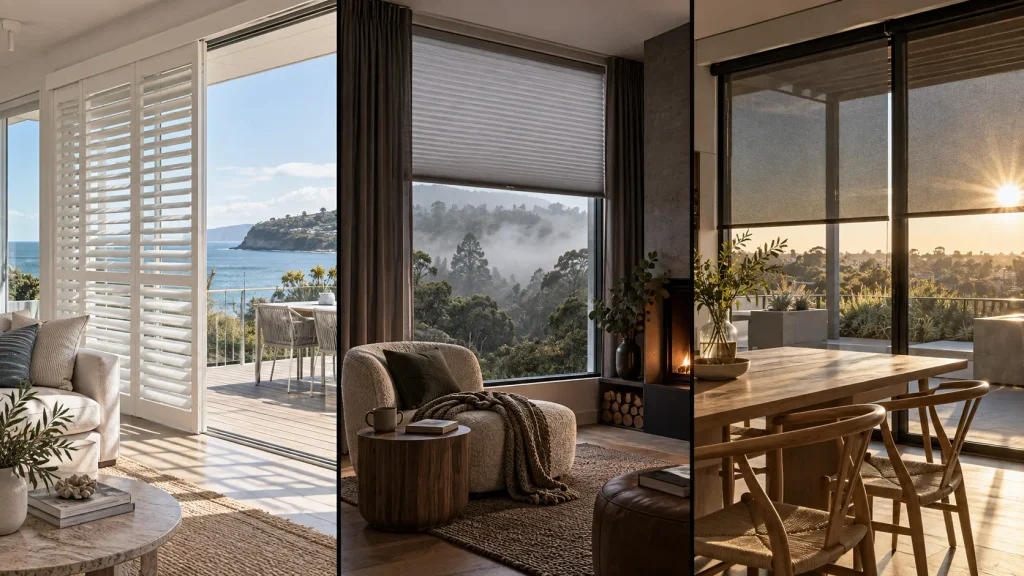
Choosing the best blinds for Melbourne weather starts with one important truth: Melbourne does not have one climate.
A home in Brighton faces different environmental pressure from a home in Olinda. A townhouse in Doncaster deals with different sun exposure from a coastal renovation in Sandringham. A Ringwood family home may need winter insulation, while a Mornington Peninsula property may need salt-resistant hardware and wind-rated outdoor systems.
That is why generic, off-the-shelf window coverings often fail.
They may fit the window roughly, but they rarely suit the microclimate. A blind that performs well in a shaded eastern suburb may fade, flap or corrode near the coast. A lightweight sheer that looks beautiful in a bayside living room may do very little for a cold hills bedroom in July.
Complete Blinds manufactures custom window furnishings from our Ringwood factory, allowing each product to suit the exact home, suburb and exposure. Our team can select marine-grade hardware, anti-corrosive powder coating, UV-tested fabrics and precision-measured systems that work with Melbourne’s local conditions.
For homeowners, renovators, architects and builders, this guide explains how to match window treatments to Melbourne’s real weather zones.
Why “Four Seasons in One Day” Demands Microclimate-Specific Design
Melbourne’s weather has a reputation for changing quickly, but the bigger issue is geography.
The city stretches across coastline, plains, dense urban suburbs, leafy eastern corridors and cooler elevated areas near the Dandenong Ranges. Because of this, window coverings need to manage different combinations of wind, salt, UV, glare, cold air and moisture.
A one-size-fits-all blind cannot solve those problems properly.
The right blinds Melbourne homeowners choose should match the window’s orientation, the suburb’s exposure and the room’s function. A coastal alfresco blind needs different engineering from a bedroom blind in Belgrave. A west-facing study in Werribee needs a different fabric strategy from a shaded formal lounge in Camberwell.
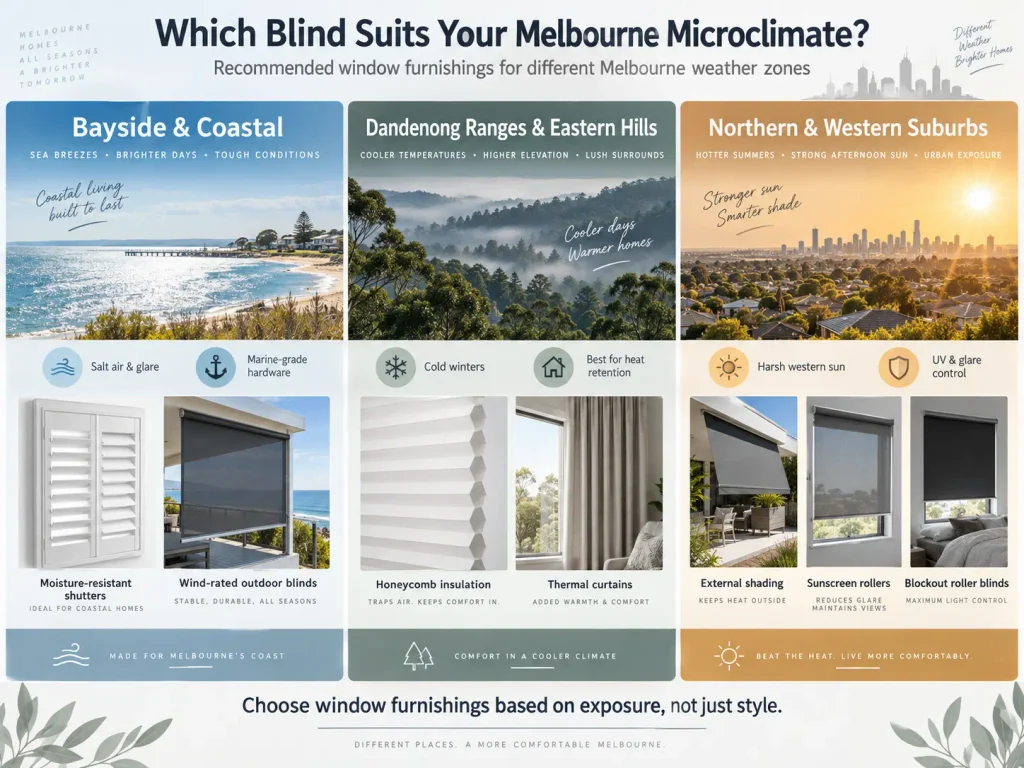
Zone 1: Bayside and Coastal Belt
This zone includes Brighton, Sandringham, Hampton, Beaumaris, Black Rock, Frankston and the Mornington Peninsula.
The main threats are:
- Salt air corrosion
- High wind gusts
- Water-reflected glare
- UV exposure
- Fabric movement and flapping
Coastal homes need materials that resist corrosion and systems that can stay stable in shifting wind conditions.
Zone 2: Eastern Foothills and Dandenong Ranges
This zone includes Ringwood, Croydon, Montrose, Belgrave, Olinda, Sassafras and surrounding hills areas.
The main threats are:
- Cold winter nights
- Condensation
- Damp air
- Tree-canopy shade
- Convective heat loss through glass
Here, insulation matters more than glare alone. Window coverings need to trap warmth, reduce cold downdraughts and manage moisture risk.
Zone 3: Northern and Western Plains
This zone includes Doncaster, Whittlesea, Craigieburn, Sunbury, Werribee, Point Cook and surrounding growth corridors.
The main threats are:
- Strong western sun
- Summer heat load
- Dry winds
- UV degradation
- Glare on large glazing
These homes often need solar control before heat enters the room.
The Bayside Battleground: Salt Air, Gales and Water Glare
Bayside window furnishings need to be tougher than they look.
Homes near the coast deal with salt particles carried by wind. Over time, salt can attack cheap screws, low-grade brackets, untreated steel components and poorly finished hardware. Once corrosion starts, mechanisms become stiff, stained or unreliable.
Wind creates another issue.
A lightweight blind in a coastal alfresco area can flap, rattle or pull away from its guides. This is not only annoying; it can shorten the product’s life.
Water glare also matters. Homes near Port Phillip Bay or open coastal outlooks often receive reflected light from water, pale paving and surrounding glass. This glare can make living rooms, bedrooms and outdoor areas uncomfortable, especially during bright afternoons.
Engineering Solutions for Bayside Homes
For coastal renovators, the priority should be material durability.
Specify:
- Marine-grade stainless steel hardware
- Powder-coated aluminium components
- UV-stabilised outdoor fabrics
- Track-guided tension systems
- Corrosion-resistant fixings
- Easy-clean surfaces
For patios, balconies and alfresco areas, track-guided outdoor blinds offer stronger control than loose-hanging systems. Options such as Ziptrak®-style guided systems help keep the fabric stable and reduce side movement in wind.
However, product selection still needs site assessment.
A sheltered courtyard in Brighton will not behave like an exposed balcony in Mornington. Wind direction, fixing substrate, span width and exposure all affect the final specification.
Plantation Shutters for Coastal Interiors
For interior windows, synthetic PVC or aluminium-compatible Plantation Shutters can suit coastal homes well.
They provide privacy, light control and durability. In bathrooms, kitchens and damp rooms, moisture-resistant shutter materials help reduce the risk of warping, swelling or surface damage.
For coastal styling, white or soft neutral shutters also support the clean Bayside aesthetic. Wider louvres improve sightlines and allow more controlled airflow.
In salt-exposed suburbs, the detail matters. Hardware, hinges, frame finish and cleaning access should all suit the location.
The Dandenong Ranges and Eastern Suburbs Cold Trap
Homes in Ringwood, Olinda, Belgrave, Montrose and the Dandenong Ranges often deal with a different problem: cold glass.
Winter temperatures drop sharply in elevated and tree-covered areas. Many homes also sit among dense canopy, which reduces winter sun penetration. As a result, rooms can feel damp, cold and slow to warm.
Windows become the weak point.
Warm indoor air moves towards the cold glass. The air beside the glass cools, drops and creates a draught-like feeling. This is called convective heat loss. Even if the frame is closed, the room can still feel as though cold air is moving around the window.
Condensation can follow.
Bedrooms, bathrooms and poorly ventilated living areas may collect moisture on the glass. If the window covering traps that moisture without airflow, mould risk can increase.
Thermal Blind Solutions for the Hills
Dandenong Ranges thermal blinds should prioritise trapped air and edge sealing.
Honeycomb or cellular blinds are one of the strongest choices. Their hexagonal pockets trap stagnant air, creating an insulating layer between the room and the window. This can noticeably reduce cold discomfort around single-glazed or older windows.
For bedrooms and living rooms, cellular blinds can also be paired with heavier curtains for extra insulation.
Another effective strategy uses blockout roller blinds with custom timber box pelmets. A roller blind alone can leave air movement around the top and sides. However, a pelmet helps seal the top of the system and reduces convection loops behind the blind.
This makes the window area feel more stable during cold evenings.
Layered Curtains for Eastern Melbourne Homes
Layered modern curtains in Melbourne are also valuable in colder suburbs.
A strong setup may include:
- S-Fold sheers for daytime privacy
- Lined blockout curtains for night-time insulation
- Ceiling-mounted tracks for better coverage
- Pelmets or recessed details to limit top-edge heat loss
This layered approach works well in bedrooms, formal living rooms and family spaces where comfort matters as much as style.
It also softens acoustics, which is useful in homes with timber floors, high ceilings or large open-plan layouts.
The Northern and Western Sun Trap
Northern and western Melbourne homes face stronger summer heat challenges.
Suburbs such as Doncaster, Whittlesea, Craigieburn, Werribee, Point Cook and Sunbury often deal with broad glazing, newer estates, open exposure and strong afternoon sun. West-facing rooms can become uncomfortable quickly because low-angle sunlight enters late in the day, after the home has already heated up.
Interior blinds can reduce glare, but they do not always solve heat gain.
Once solar radiation passes through the glass, much of that energy has entered the room. The fabric may stop glare, but the heat still needs somewhere to go.
That is why external shading matters.
External Shading Before the Glass
The best way to control summer heat is to stop sunlight before it reaches the pane.
Awnings, external screens and outdoor shading systems reduce solar heat gain at the outside surface. This can lower the burden on air conditioning and improve comfort in living areas, bedrooms and alfresco zones.
For north-facing windows, shading should allow winter sun while blocking harsh summer sun where possible. For west-facing glass, stronger shading is usually needed because the sun sits lower and penetrates deeper into the room.
Internal sunscreen blinds still have value.
They reduce glare, protect furniture from UV exposure and preserve outward views during the day. However, in severe heat zones, they often work best as part of a layered strategy with external shading.
UV and Fabric Durability
Northern and western exposure can punish cheap fabrics.
Poor-quality materials may fade, curl, crack or lose tension under repeated heat and UV exposure. This is especially noticeable on large windows, sliding doors and rooms with strong afternoon light.
For these areas, Complete Blinds can specify UV-tested fabrics, stronger mechanisms and hardware suitable for wide spans.
Factory-direct customisation from Ringwood also allows better control over the blind width, tube strength and fixing method, reducing the risk of sagging or uneven rolling.
Microclimate Performance Matrix
| Melbourne Microclimate Zone | Primary Environmental Threat | Recommended Product & Material Spec | Thermal & Structural Benefit |
|---|---|---|---|
| Bayside and Coastal Belt: Brighton, Sandringham, Mornington | Salt spray, high wind, reflected glare, UV exposure | Marine-grade hardware, powder-coated aluminium, track-guided outdoor blinds, PVC or aluminium-compatible shutters | Resists corrosion, reduces fabric movement, controls glare and improves product lifespan |
| Dandenong Ranges and Eastern Foothills: Olinda, Belgrave, Ringwood | Cold glass, condensation, damp air, winter heat loss | Honeycomb blinds, pelmet-sealed blockout rollers, lined curtains, thermal drapes | Traps air, reduces convective heat loss and improves winter comfort |
| Northern and Western Plains: Doncaster, Werribee, Whittlesea | Intense summer heat, dry wind, western sun, UV degradation | External shading, sunscreen rollers, UV-tested fabrics, heavy-duty roller tubes | Blocks solar heat, reduces glare and protects interiors from fading |
| Inner-City Heritage Areas: Carlton, Fitzroy, Hawthorn, Camberwell | Older timber frames, draughts, non-square reveals, heritage restrictions | Custom Roman blinds, cellular blinds, lined curtains, discreet internal fittings | Improves comfort without changing the facade or damaging heritage character |
| New Build Growth Corridors: Point Cook, Craigieburn, Clyde North | Large aluminium glazing, heat gain, open-plan glare | Motorised rollers, recessed tracks, sunscreen and blockout dual systems | Supports smart control, privacy, heat management and clean architectural detailing |
| Leafy Eastern Suburbs: Doncaster East, Vermont, Warrandyte | Mixed shade, cool rooms, seasonal glare | Layered sheers, cellular blinds, shutters and blockout rollers | Balances insulation, light filtering, privacy and style |
Matching Product Choice to Room Function
Microclimate matters, but the room also changes the decision.
A coastal bathroom needs different window furnishings from a coastal living room. A hills bedroom needs stronger insulation than a hills hallway. A western-facing home office needs glare control that still allows productivity.
Bedrooms
Bedrooms need privacy, darkness and thermal comfort.
In colder suburbs, honeycomb blinds or lined curtains help reduce winter chill. In bright western suburbs, blockout rollers or cassette systems can control early morning and afternoon light.
For coastal bedrooms, avoid poor-quality components that may corrode near open windows or balcony doors.
Living Areas
Living areas need flexible light control.
Sheers can soften daylight and reduce glare without fully closing the room off. Roller blinds can add blockout control at night. External shading helps with summer heat.
In high-end renovations, layered systems usually deliver the best result.
Bathrooms and Laundries
Moisture resistance should lead the decision.
PVC shutters, aluminium Venetians or suitable moisture-resistant roller fabrics usually perform better than heavy fabric Romans in wet zones.
Ventilation still matters, especially in cooler eastern or hills suburbs.
Home Offices
Home offices need glare control, thermal comfort and privacy.
Sunscreen rollers can reduce glare while preserving outward view. In cold rooms, cellular blinds add insulation. If video calls matter, curtains can soften acoustics and reduce visual harshness behind the desk.
The Ringwood Factory Advantage: Built for Local Extremes
The best blinds for Melbourne weather need more than the right fabric name.
They need correct engineering.
Complete Blinds manufactures from our Ringwood facility, which allows our team to design and build products for local Victorian conditions. We can account for wind exposure, salt air, UV load, window orientation, frame condition and room function before production.
This is especially important because Melbourne homes rarely have perfect windows.
Older homes may have out-of-square timber reveals. Bayside properties may have corroded hardware or exposed openings. New builds may include oversized glazing, narrow reveals and large sliding doors. Hills homes may need tighter thermal coverage to manage cold downdraughts.
Factory-direct manufacturing helps us control:
- Laser-measured custom sizing
- Marine-grade hardware selection
- Anti-corrosive powder-coated aluminium
- UV-tested Australian fabric options
- Thermal pelmet integration
- Track-guided outdoor systems
- Moisture-resistant product selection
- Heavy-duty mechanisms for wide spans
- Custom colour matching to frames and interiors
This level of detail is difficult to achieve with mass-imported blinds.
A generic blind may cover the opening, but it may not handle the exposure. Over time, that shows through fading, corrosion, rattling, poor insulation or light gaps.
A custom product performs better because it starts with the actual conditions.
Final Recommendation: Choose for Your Suburb, Not Just Your Style
The smartest way to choose window furnishings is to match the product to your microclimate.
For Bayside homes, prioritise salt resistance, wind stability and glare control. Choose marine-grade hardware, powder-coated aluminium, outdoor track-guided systems and moisture-resistant shutters.
For the Dandenong Ranges and eastern suburbs, focus on winter insulation. Honeycomb blinds, sealed pelmets, blockout rollers and layered curtains help reduce cold glass discomfort and heat loss.
For northern and western suburbs, control the sun before it overheats the room. External shading, sunscreen rollers and UV-tested fabrics protect both comfort and interiors.
For heritage homes, respect the frame. Custom internal solutions can improve performance without altering the facade.
For new builds, plan early. Recessed tracks, motorised systems, pelmets and exterior shading should be considered before the final fit-off stage.
Complete Blinds custom-manufactures from our Ringwood factory, giving Melbourne homeowners, builders and designers access to window furnishings engineered for real local conditions.
Frequently Asked Questions
Choose corrosion-resistant products with marine-grade hardware, powder-coated aluminium and UV-stabilised fabrics. PVC or moisture-resistant Plantation Shutters also work well for coastal interiors, especially in bathrooms and street-facing rooms.
Use honeycomb blinds, lined curtains or pelmet-sealed blockout rollers. These products trap air near the window and reduce cold downdraughts. Custom fitting is important because side gaps allow heat to escape.
Yes, if they are properly specified for the site. Track-guided outdoor blinds and awnings with suitable hardware perform better than loose systems. Wind exposure, fixing points and span width should be assessed before installation.
Timber shutters can move in high-moisture areas if the product is not suitable. For bathrooms, laundries and damp coastal zones, moisture-resistant PVC or synthetic shutter options are usually safer.
Prioritise heat and glare control. External shading works best for stopping solar heat before it reaches the glass. Internally, use sunscreen rollers, blockout rollers or layered curtains depending on the room’s privacy and darkness needs.
Need Window Furnishings Built for Your Melbourne Weather Zone?
Every Melbourne suburb places different pressure on your blinds, curtains, shutters and outdoor shading. Coastal homes need corrosion-resistant materials, hills properties need stronger thermal insulation, and west-facing rooms need serious heat and glare control.
Complete Blinds can assess your windows, local exposure, room use and design goals, then recommend a custom-made solution from our Ringwood factory.
Book a service enquiry below and our team will help you choose window furnishings built for your home, your suburb and Melbourne’s changing weather.


