


If you live along a busy road in Richmond, Box Hill, Brunswick, South Yarra, or anywhere close to Melbourne’s inner and middle-ring suburbs, chances are street noise is part of daily life. Trams rattling past. Late-night traffic. Early-morning deliveries. The constant hum that never quite switches off.
And with Melbourne’s push toward medium-density housing, this problem isn’t going away.
Here’s the short, practical answer upfront (the takeaway):
If your goal is to reduce street noise inside your home, heavy-weight drapes generally outperform plantation shutters for sound dampening, especially in bedrooms and living areas. However, plantation shutters still play an important role when noise reduction needs to be balanced with durability, ventilation, and architectural style.
Let’s break it down properly — from a Melbourne homeowner’s point of view.
Why Street Noise Is a Growing Issue in Melbourne Homes
Melbourne’s urban landscape has changed rapidly over the past decade. Areas like Richmond and Box Hill now feature:
- More apartments and townhouses
- Homes built closer to roads and rail lines
- Increased traffic density throughout the day
- Longer operating hours for trams, buses, and delivery vehicles
Older homes weren’t designed with modern noise levels in mind. Single-glazed windows, high ceilings, and timber frames — beautiful, yes, but not ideal for acoustics.
That’s why many homeowners searching for sound-dampening window treatments in Melbourne are looking for solutions that:
- Reduce noise without blocking all natural light
- Improve sleep quality
- Fit both modern and heritage-style homes
- Add insulation as a bonus
How Window Treatments Actually Reduce Noise (And Their Limits)
Before comparing products, it’s important to set expectations.
What window coverings can do
- Reduce high-frequency noise (traffic hiss, voices, horns)
- Soften sharp sound reflections inside rooms
- Improve overall acoustic comfort
- Complement other noise-reduction measures
What they can’t do
- Fully soundproof a room
- Replace double glazing or acoustic windows
Think of window treatments as sound dampeners, not soundproofing systems. Used correctly, they make a noticeable difference — especially in everyday comfort.
The Two Most Effective Options: Heavy-Weight Drapes vs Plantation Shutters
When it comes to noise control, these two options consistently outperform standard blinds and lightweight curtains.
Let’s compare them honestly.
Heavy-Weight Drapes: The Quiet Achiever
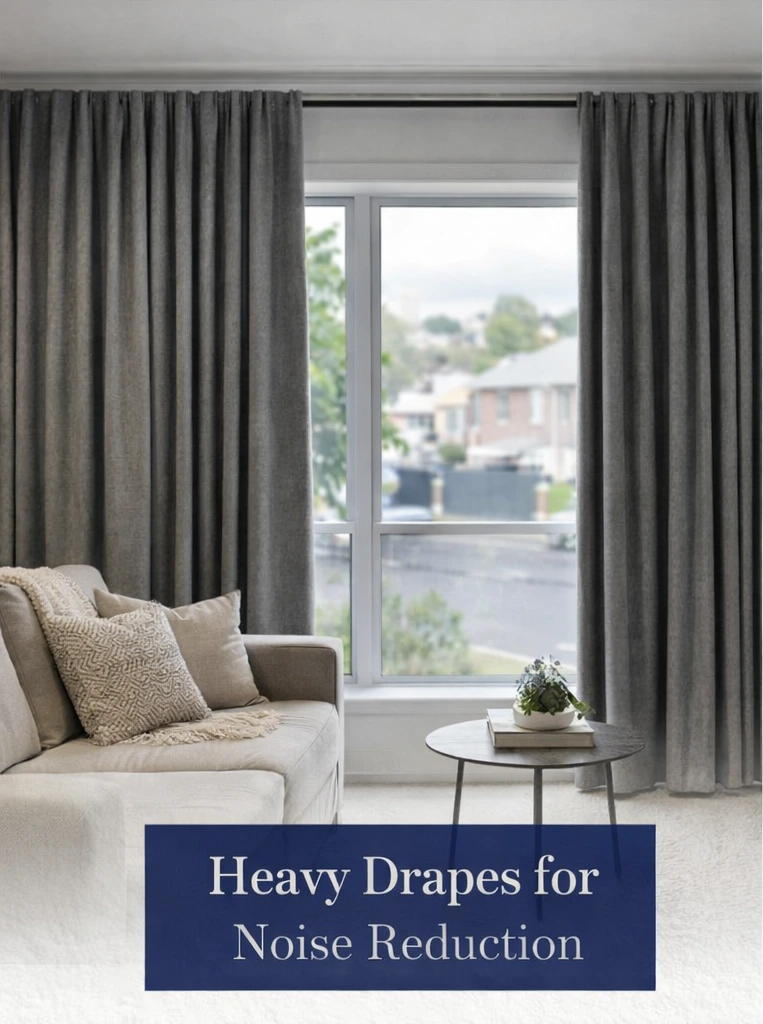
If noise reduction is your top priority, heavy-weight drapes are usually the strongest performer.
Why heavy drapes work so well for sound
Sound travels in waves. Soft, dense materials absorb those waves instead of bouncing them back into the room.
Heavy drapes:
- Add mass (critical for noise reduction)
- Create an air gap between fabric and window
- Absorb mid-to-high frequency sounds
- Reduce echo within the room
Best fabrics for sound dampening
- Velvet
- Thick woven polyester
- Wool blends
- Thermal or acoustic-lined fabrics
The lining matters just as much as the fabric. A proper blockout or acoustic lining dramatically improves results.
Pros of Heavy-Weight Drapes
- Excellent noise absorption
- Strong thermal insulation (warmer in winter, cooler in summer)
- Softens harsh street noise
- Ideal for bedrooms and living rooms
- Works well in heritage homes
Cons of Heavy-Weight Drapes
- Requires wall or ceiling tracking
- Needs occasional professional cleaning
- Takes up more visual space
- Not ideal for wet areas
Best suited for Melbourne homes that:
- Face busy streets or tram lines
- Have single-glazed windows
- Are used as bedrooms or media rooms
- Need improved sleep quality
👉 Learn more about custom curtain options here:
https://completeblinds.com.au/curtains/
Plantation Shutters: Controlled, Structured Noise Reduction
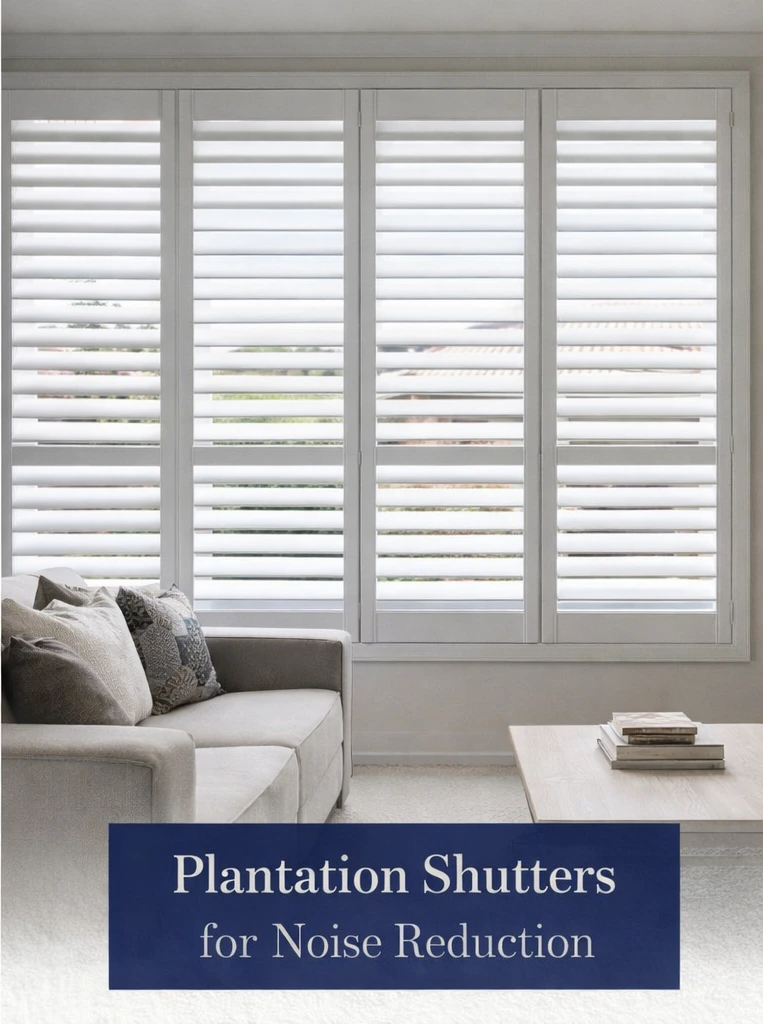
On the other hand, plantation shutters approach noise reduction differently.
They don’t absorb sound the way fabric does — instead, they block and redirect it.
How shutters help with noise
- Create a solid barrier inside the window recess
- Reduce direct sound transmission
- Add rigidity to older window frames
- Minimise rattling in windy or noisy conditions
Shutters are especially effective when:
- Installed inside deep window reveals
- Custom-fit with minimal gaps
- Closed fully during peak noise times
Pros of Plantation Shutters
- Durable and long-lasting
- Easy to clean
- Good for privacy and light control
- Adds property value
- Suits both modern and period homes
Cons of Plantation Shutters
- Less effective than drapes for sound absorption
- Gaps between louvres reduce acoustic performance
- Higher upfront investment
- Hard surfaces reflect some sound
Best suited for Melbourne homes that:
- Need noise reduction plus durability
- Have pets or children
- Want a clean architectural look
- Are used as living or dining spaces
👉 Explore plantation shutters here:
https://completeblinds.com.au/plantation-shutters/
Side-by-Side Comparison: Heavy Drapes vs Plantation Shutters
Here’s a clear comparison to help you decide.
| Feature | Heavy-Weight Drapes | Plantation Shutters |
|---|---|---|
| Noise reduction | ⭐⭐⭐⭐½ | ⭐⭐⭐ |
| Sound absorption | Excellent | Moderate |
| Thermal insulation | Excellent | Good |
| Light control | High | Adjustable |
| Privacy | Excellent | Excellent |
| Maintenance | Medium | Low |
| Style flexibility | Very high | Structured |
| Heritage homes | Ideal | Suitable |
| Busy streets | Best choice | Good support option |
Which One Works Better in Richmond or Box Hill?
Let’s get specific.
Richmond
- Higher traffic density
- Tram and train noise
- Narrow streets
- Mix of heritage and modern apartments
Best solution:
Heavy-weight drapes (often layered with sheers) offer the most noticeable noise reduction in Richmond homes.
Box Hill
- Busier arterial roads
- More medium-density developments
- Family homes + apartments
Best solution:
Plantation shutters work well in living areas, while heavy drapes perform better in bedrooms.
The Best Solution Isn’t Always One or the Other
Here’s the catch: the most effective noise-reduction setups often combine both.
Layered approach (highly effective)
- Plantation shutters for structure and privacy
- Heavy curtains over the top for sound absorption
This combination:
- Improves acoustic performance
- Enhances insulation
- Gives flexibility day and night
- Looks intentional, not bulky
This approach is increasingly popular in Melbourne homes dealing with persistent street noise.
Energy Efficiency: A Valuable Side Benefit
Noise and temperature often go hand in hand.
Why sound-dampening treatments also save energy
- Thicker materials reduce heat transfer
- Curtains limit cold drafts in winter
- Shutters reduce solar heat gain in summer
According to Sustainability Victoria, effective window coverings can significantly reduce heating and cooling costs in older Melbourne homes.
Noise reduction isn’t just about peace and quiet — it’s also about comfort and energy efficiency.
Design Trends in Acoustic Window Treatments (2025–2026)
Sound-dampening doesn’t mean ugly or outdated anymore.
What’s trending in Melbourne:
- Floor-to-ceiling curtains in neutral tones
- Textured fabrics (linen blends, matte finishes)
- Ceiling-mounted curtain tracks
- Soft curves and wave folds
- White or timber plantation shutters with wider louvres
Modern acoustic solutions are now designed to disappear visually while working hard functionally.
Smart Home Compatibility: Can Noise-Reducing Treatments Be Automated?
Yes — and this is becoming more common.
Motorised curtains and shutters
- Automatically close during peak traffic hours
- Improve sleep routines
- Integrate with platforms like Google Home
- Battery-powered options available (no rewiring)
👉 Learn more about motorised solutions here:
https://completeblinds.com.au/blinds/motorisation/
For smart home basics, Google’s official guide is useful:
https://home.google.com
Automation doesn’t reduce noise directly — but it ensures the treatments are always used properly, which makes a real difference over time.
Practical Tips for Choosing the Right Sound-Dampening Solution
Let’s make this practical.
Choose based on room type
- Bedrooms: Heavy-weight drapes (top priority)
- Living rooms: Drapes or shutters (or both)
- Home offices: Drapes to reduce distraction
- Street-facing rooms: Layered solutions
Consider your lifestyle
- Shift worker? Prioritise blockout + acoustic lining
- Kids or pets? Shutters offer durability
- Renters? Curtains are more reversible
Factor in Melbourne’s climate
- Cold winters = thicker fabrics help
- Hot summers = reflective linings matter
- Variable weather = flexibility is key
Why Custom Matters for Acoustic Performance
Off-the-shelf solutions leave gaps. Gaps let sound through.
Custom window treatments:
- Fit tighter to frames
- Reduce sound leakage
- Perform more consistently
- Look intentional and polished
This is where working with a local Melbourne specialist like Complete Blinds makes a real difference — especially in challenging inner-city environments.
Conclusion: Creating Quieter Homes on Busy Melbourne Streets
Street noise is part of modern Melbourne living — but it doesn’t have to dominate your home.
If noise reduction is your main concern:
- Heavy-weight drapes are the most effective sound-dampening window treatment
- Plantation shutters provide structure, durability, and secondary noise control
- Layered solutions deliver the best overall results
For homes in Richmond, Box Hill, and similar high-activity suburbs, thoughtful window treatments can dramatically improve comfort, sleep quality, and day-to-day wellbeing.
And when chosen and installed properly, they do much more than quiet things down — they elevate how your home feels.
Frequently Asked Questions (FAQs)
Yes. Heavy-weight curtains with proper lining can noticeably reduce high-frequency traffic noise and improve room acoustics.
They help reduce noise but don’t absorb sound as well as heavy curtains. They work best as part of a layered solution.
Heavy-weight drapes with blockout or acoustic lining are the best option for bedrooms.
No. They complement glazing but don’t replace it. However, they can still make a meaningful difference.
Indirectly, yes. Automation ensures curtains are closed during noisy periods, improving overall effectiveness.
Not necessarily. Sheers can be layered underneath heavy curtains to maintain daytime light while reducing noise.
If you’re dealing with constant street noise and want practical, proven window treatment solutions designed for Melbourne homes, the right combination of materials, fit, and local expertise makes all the difference.


