


Quick Verdict: Coastal homes across Bayside Melbourne and the Mornington Peninsula face three major threats: corrosive salt spray, reflected solar glare, and powerful wind gusts. Durable window furnishings require marine-grade 316 stainless steel hardware, coastal-grade powder-coated aluminium, UV-stabilised fabrics, and moisture-resistant shutters. Track-guided outdoor systems also improve stability, provided their wind limits and maintenance requirements are respected.
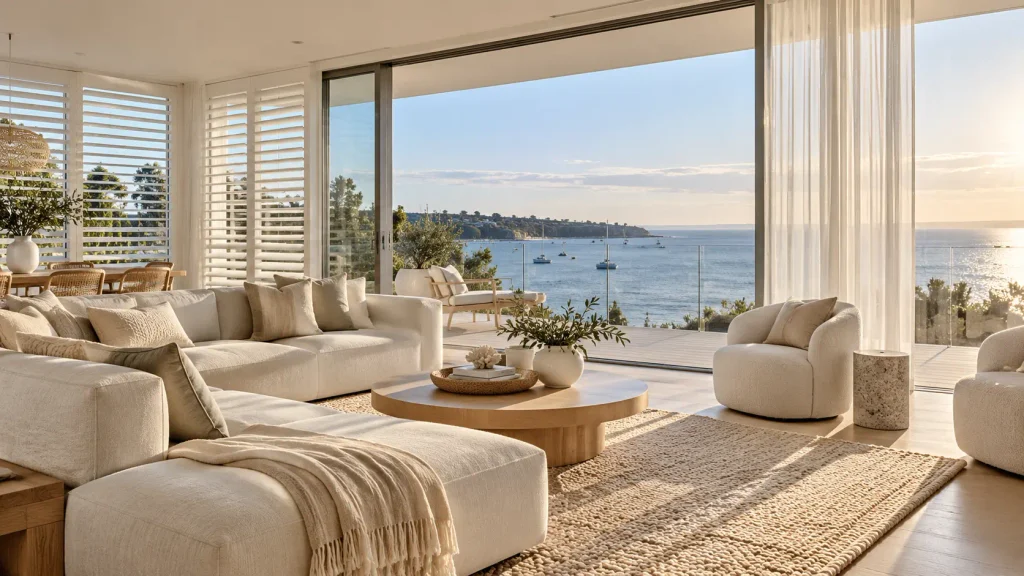
Choosing the right bayside Melbourne window coverings requires more than matching fabrics and colours to a coastal interior.
Homes in Brighton, Sandringham, Hampton, Beaumaris, Black Rock and Frankston face environmental conditions that can shorten the lifespan of poorly specified blinds, shutters and outdoor shading.
Further south, properties around Mount Martha, Sorrento and Portsea experience additional exposure to coastal winds, airborne salt and changing weather.
These conditions affect everything from blind mechanisms to aluminium tracks, shutter hinges and fabric coatings.
A beautiful outdoor blind can become difficult to operate if salt accumulates inside its mechanism. Similarly, an unsuitable shutter may swell or deteriorate in damp conditions, while low-quality fabrics can fade or lose strength under prolonged UV exposure.
As a result, coastal window furnishings need careful material selection, appropriate hardware and precision installation.
Complete Blinds provides factory-direct custom window furnishing solutions from its Ringwood base, helping Melbourne homeowners, renovators and builders select products suited to local environmental conditions.
From marine-grade blinds Melbourne coastal properties require to custom plantation shutters and outdoor awnings, the right specification can improve durability, comfort and long-term appearance.
This guide explains how to select window furnishings that balance coastal engineering, architectural style and everyday performance.
Why Bayside Melbourne Window Coverings Need Coastal-Grade Materials
Melbourne’s coastline creates a demanding environment for external fixtures and window furnishings.
Although a sheltered Hampton townhouse and an exposed Portsea property may share a similar coastal design style, their environmental exposure can differ significantly.
Distance from the water matters. However, elevation, prevailing winds, neighbouring buildings and direct exposure to salt spray also influence product durability.
For this reason, coastal specifications should reflect the individual property rather than the suburb alone.
1. Corrosive Salt Air and Mechanical Wear
Wind carries fine salt particles inland from Port Phillip Bay and the surrounding coastline.
These particles settle on metal surfaces, including screws, springs, hinges, blind brackets and outdoor tracks.
When salt combines with moisture, corrosion can develop more quickly.
Low-grade steel fixings are particularly vulnerable. Over time, rust may stain surrounding surfaces, while corrosion within moving components can make mechanisms stiff or unreliable.
Some inexpensive imported window furnishings use hardware intended for ordinary indoor conditions rather than exposed coastal environments.
Consequently, premature deterioration can occur, particularly where maintenance is neglected.
For salt air window coverings Brighton homeowners install near the foreshore, the material specification should address both visible and concealed components.
A quality fabric alone cannot compensate for poor brackets, unsuitable screws or corroding tracks.
2. Reflected Glare and UV Exposure
Coastal homes often feature large windows that maximise water views and natural daylight.
Although this creates beautiful living spaces, expansive glazing can also increase glare and solar exposure.
Sunlight reflects from water, pale paving, sand, neighbouring glass and light-coloured surfaces.
Meanwhile, ultraviolet radiation can contribute to fading and material degradation.
Over time, prolonged exposure may affect curtain fabrics, upholstered furniture, timber flooring and some polymer components.
Therefore, coastal window furnishings need fabrics with suitable UV stability, colourfastness and solar-control performance.
Sunscreen blinds can help reduce daytime glare without completely obscuring the view. For bedrooms, blockout fabrics provide stronger light control and privacy.
External shading can reduce solar heat gain before sunlight reaches the glass.
3. Coastal Winds and Fabric Movement
Strong coastal gusts create additional challenges.
Unlike internal blinds, outdoor screens experience direct wind pressure across their fabric surfaces.
Loose-hanging blinds may billow, flap or rattle against surrounding structures. Repeated movement can place stress on brackets, seams, bottom rails and fixing points.
Large spans are especially demanding.
For example, an outdoor blind covering a wide alfresco opening experiences different wind forces from a narrow screen installed in a sheltered courtyard.
That is why wind resistance depends on more than fabric thickness.
The complete system must account for track design, fixing strength, blind dimensions, wind exposure and manufacturer operating limits.
Marine-Grade Blinds Melbourne: Choosing Materials That Last
The materials behind a window furnishing often determine its long-term durability.
In coastal environments, hardware and surface finishes deserve the same attention as fabric colour or style.
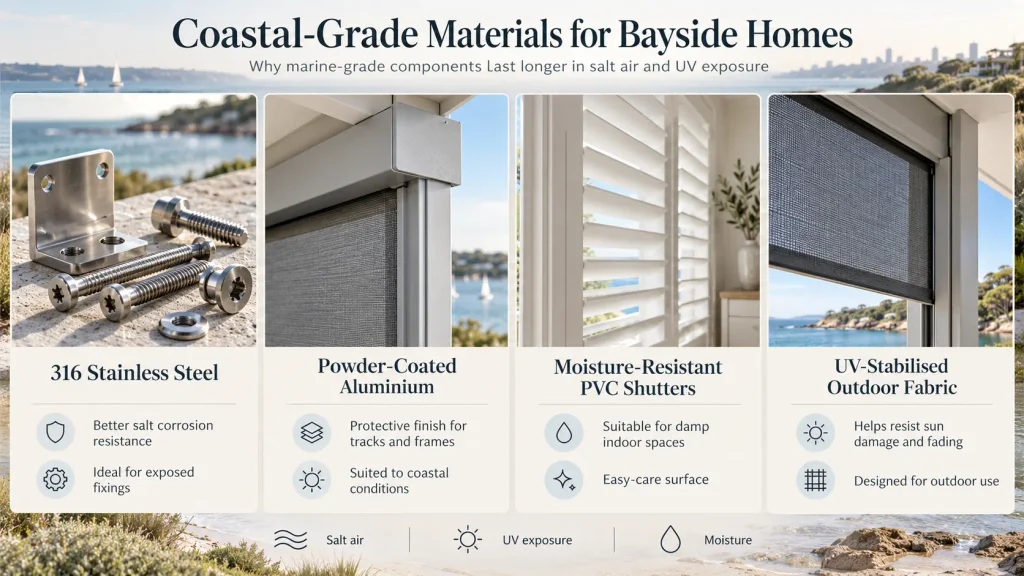
Marine-Grade 316 Stainless Steel Hardware
316 stainless steel is a common specification for corrosion-resistant coastal fixings.
Its molybdenum content improves resistance to chloride-related corrosion compared with common lower-grade stainless steels.
For exposed Bayside installations, suitable 316 stainless steel screws, hinges and fasteners can provide greater durability than ordinary untreated steel.
However, marine-grade stainless steel is not completely corrosion-proof.
Salt deposits can still cause surface staining, particularly in highly exposed or poorly washed areas.
Therefore, regular cleaning remains important. Extremely aggressive locations may also require higher-grade materials or specialised engineering advice.
For coastal projects, ask suppliers to confirm the actual fixing grade rather than accepting a broad claim such as “rust-resistant hardware”.
Powder-Coated Aluminium Tracks and Pelmets
Aluminium is widely used in modern blind systems because it offers a strong combination of low weight, stiffness and corrosion resistance.
However, not every aluminium finish suits aggressive coastal exposure.
A properly specified exterior-grade powder-coating system helps protect components while maintaining a clean architectural appearance.
Common applications include:
- Outdoor blind side tracks
- Cassette headboxes
- Bottom rails
- Pelmets
- Shutter frames
- External shading components
For premium coastal homes, colour matching also matters.
Matte white, Surfmist-style finishes, Monument-style charcoal and muted architectural neutrals can complement contemporary window frames.
Nevertheless, the selected coating must suit the site’s corrosivity exposure. Regular washing also helps preserve the finish.
UV-Stabilised Fabrics and Moisture Resistance
Outdoor fabrics face sunlight, moisture, airborne debris and changing temperatures.
For this reason, standard decorative textiles are rarely suitable for exposed alfresco applications.
Better options include UV-stabilised sunscreen mesh, suitable outdoor acrylic fabrics and appropriately specified PVC screen materials.
These fabrics can provide improved resistance to fading, mildew and environmental wear.
However, the material should match the intended use.
Breathable mesh allows airflow and filtered visibility, while clear or tinted PVC screens provide a different balance of enclosure, transparency and weather protection.
Before purchasing, check the manufacturer’s care instructions, UV warranty conditions and suitability for coastal installation.
Best Coastal Window Furnishings by Room and Outdoor Zone
Different parts of a coastal property need different furnishing systems.
An exposed Portsea balcony requires stronger wind consideration than a sheltered Brighton bedroom. Meanwhile, a damp bathroom needs different materials from a formal living room overlooking the bay.
The most effective approach is to specify products according to exposure, room function and maintenance requirements.
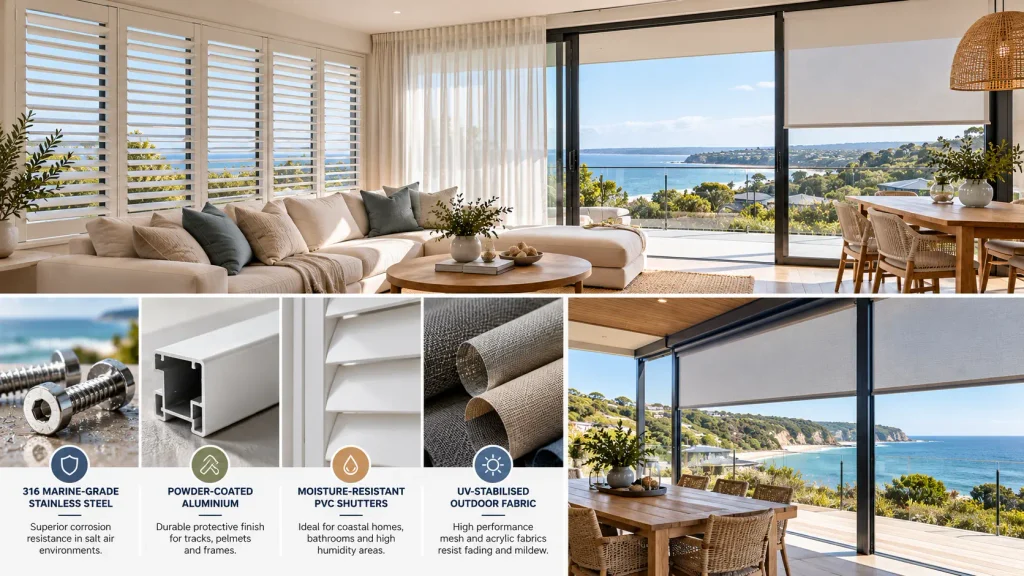
1. Exterior Alfresco Areas: Ziptrak® and Track-Guided Outdoor Blinds
Outdoor entertaining areas are a major feature of coastal Melbourne homes.
From Brighton patios to Sorrento decks, homeowners want to enjoy outdoor views while managing wind, glare and changing temperatures.
Track-guided systems offer a practical solution.
Products such as Ziptrak® use side-guided technology to hold the fabric edges within vertical tracks.
This reduces uncontrolled fabric movement compared with conventional loose-hanging blinds.
Consequently, a correctly specified system can improve comfort and provide a more finished appearance across alfresco openings.
For homeowners researching durable outdoor blinds Mornington Peninsula properties need, the most important considerations include:
- Wind exposure and fixing strength
- Blind width and drop
- Fabric selection
- Side-track configuration
- Corrosion-resistant hardware
- Manufacturer wind operating instructions
Track-guided blinds are not storm shutters.
During severe winds and storms, manufacturers generally require blinds to be fully retracted.
For exposed coastal homes, professional assessment is essential before selecting a system.
Explore Complete Blinds’ external awnings and outdoor shading options for patios, decks and exposed glazing.
2. Coastal Facades: Plantation Shutters
Plantation Shutters remain popular in Bayside homes because they combine privacy, airflow and architectural structure.
Their adjustable louvres allow homeowners to redirect daylight while managing visibility from neighbouring properties.
For coastal renovations, wider louvres can also provide cleaner sightlines towards gardens and water views.
89mm and 114mm louvre configurations, where available, suit contemporary coastal interiors particularly well.
However, the shutter material needs careful selection.
PVC and Moisture-Resistant Shutters
Suitable PVC or engineered synthetic shutters work well in bathrooms, laundries and other moisture-prone interiors.
They resist moisture-related problems that can affect some timber products.
Nevertheless, not every PVC shutter suits direct outdoor exposure or intense heat.
Product-specific UV stability, reinforcement and temperature limitations must be checked.
Basswood and Timber Shutters
Basswood shutters offer a premium appearance, lightweight construction and natural timber texture.
They can work beautifully in protected coastal living rooms and bedrooms.
However, timber requires stable indoor conditions and suitable protective finishes.
For exposed outdoor installations or consistently damp areas, aluminium or moisture-resistant synthetic alternatives generally offer greater durability.
Aluminium Outdoor Shutters
For highly exposed balconies and facades, purpose-designed outdoor aluminium shutters can provide a robust alternative.
Their suitability still depends on engineering, fixing design, coating specification and local exposure.
3. Coastal Bedrooms: Sheers and Blockout Layers
Coastal homes need more than durable outdoor systems.
Indoor comfort matters too.
Bedrooms facing the bay may receive strong morning light, reflected glare or illumination from neighbouring properties.
Layered window furnishings offer flexible control.
A popular configuration combines soft linen-look S-Fold sheers with blockout roller blinds.
During the day, sheers filter sunlight and soften the interior without completely hiding the outside view.
At night, the blockout roller provides stronger privacy and room darkening.
This arrangement also suits bedrooms with large sliding doors or full-height glazing.
For a softer design, homeowners can pair sheers with lined curtains instead.
Layered modern curtains in Melbourne add texture, warmth and visual comfort to contemporary coastal homes.
4. Smart Coastal Automation
Large coastal windows can be difficult to operate manually.
High glazing, expansive sliding doors and wide alfresco openings often benefit from motorisation.
Compatible motorised blinds allow homeowners to operate selected outdoor shading systems through switches, remotes or automated controls.
Depending on the motor and controller, sun and wind sensors may also be available.
For example, a compatible wind sensor can trigger retraction when wind speed reaches a nominated threshold.
However, sensor automation should never replace appropriate wind-rated design or manufacturer operating instructions.
Sudden coastal gusts may develop faster than a blind can retract. Power failures and equipment faults can also affect automated operation.
Therefore, homeowners should treat sensors as an additional protection measure rather than a guarantee against storm damage.
Coastal Window Furnishing Material Comparison
| Material Type | Salt Air Corrosion Resistance | Wind Load Suitability | UV and Moisture Resistance | Ideal Coastal Application |
|---|---|---|---|---|
| Standard Untreated Steel Hardware | Low | Depends on design; corrosion may weaken components | Poor corrosion resistance | Avoid exposed coastal use |
| 316 Stainless Steel Fixings | High with regular maintenance | Suitable for engineered fixing systems | Excellent moisture resistance; surface staining remains possible | Exposed coastal hardware and fixings |
| Coastal-Grade Powder-Coated Aluminium | High with suitable coating and maintenance | Strong when correctly engineered | Good UV and moisture performance with appropriate coating | Outdoor tracks, pelmets, shutters and awnings |
| Solid PVC Shutters | Not susceptible to metallic rust | Product-dependent; generally intended for internal use | Good moisture resistance; UV and heat tolerance vary | Bathrooms, laundries and sheltered coastal interiors |
| Basswood Timber Shutters | Not subject to metallic corrosion | Primarily an interior furnishing | Moderate; requires protection from moisture | Dry, protected coastal living spaces |
| UV-Stabilised Outdoor Mesh | Not applicable to fabric; hardware still matters | Suitable for rated track-guided systems | High when correctly specified | Alfresco areas and exposed outdoor blinds |
| Outdoor Acrylic Fabrics | Not applicable to fabric; hardware still matters | Depends on complete awning system | Often strong colourfastness and water resistance | External awnings and coastal shading |
Technical note: Wind resistance belongs to the complete installed system, not the fabric or material alone. Always confirm the product’s tested configuration, span limitations and installation requirements.
Coastal Interior Styling Trends for 2026–2027
Coastal luxury has moved beyond bright white interiors and nautical decoration.
Across Brighton, Hampton, Beaumaris and Sorrento, a softer architectural direction is becoming increasingly appealing.
Warm neutrals, natural textures, matte finishes and layered fabrics help create a refined coastal atmosphere.
The goal is to make the interior feel relaxed without sacrificing precision.
Warm Oatmeal, Sand and Soft White
Oatmeal, warm taupe, sandy beige and muted stone colours suit coastal homes because they complement timber flooring, limestone, natural upholstery and outdoor landscapes.
These shades also soften strong sunlight without introducing excessive visual contrast.
For large windows, understated neutral blinds help preserve the view.
Matte Architectural Finishes
Matte white shutters remain a classic option for Hamptons-inspired homes.
Meanwhile, charcoal and dark bronze aluminium details suit contemporary coastal architecture with black window frames, stone finishes and timber cladding.
The correct finish should coordinate with surrounding materials.
For exposed hardware, appearance must never take priority over coating suitability.
Textured Sheers and Natural Fabrics
Linen-look sheers add movement and softness to rooms with large glass openings.
They also help balance the hard finishes commonly found in coastal homes, including polished concrete, stone benchtops and aluminium doors.
For bedrooms, combine sheers with a blockout layer to provide stronger night-time privacy.
However, natural linen and other absorbent fabrics are better suited to protected interiors than exposed outdoor applications.
The Coastal Resort Aesthetic
A premium coastal interior should feel effortless.
Continuous S-Fold sheers, wide-louvre shutters, concealed blind cassettes and discreet motorised controls all support this direction.
The strongest results combine durable materials with simple architectural detailing.
The Ringwood Factory-Direct Advantage: Precision Coastal Customisation
Coastal durability depends on more than material selection.
A premium blind can still perform poorly if the installer uses unsuitable fixings or leaves excessive movement around the mounting points.
Likewise, an outdoor blind may rattle if the surrounding structure cannot support the specified span.
For Bayside Melbourne window coverings, measurement and installation require careful attention.
Complete Blinds’ Ringwood-based team supports custom-made window furnishing projects across Melbourne, including coastal and Mornington Peninsula properties.
Precision Measuring for Coastal Openings
Coastal renovations often feature large sliding doors, timber frames, exposed balconies and custom architectural glazing.
These openings rarely follow one standard size.
Before manufacturing, accurate site measurements help establish:
- Opening width and drop
- Frame squareness
- Available fixing surfaces
- Window and door clearances
- Track positioning
- External wind exposure
- Fabric coverage
- Pelmet and motor requirements
Precision measurement allows the chosen system to fit properly without unnecessary gaps or awkward bracket positions.
Although close fitting can reduce rattling, draughts and light leakage, no blind should be described as completely airtight unless the system has been specifically designed and tested for that performance.
Custom Material and Hardware Selection
Factory-direct manufacturing provides greater flexibility than standard-sized retail products.
Depending on the selected range and project requirements, Complete Blinds can coordinate appropriate hardware, suitable fabrics and finish options.
For exposed locations, this may include marine-grade stainless steel fixings, coastal-suitable powder-coated aluminium and UV-stabilised outdoor fabrics.
The product schedule should confirm which materials and finishes are included.
That detail matters for maintaining warranty eligibility and matching performance expectations.
Why Installation Quality Matters
A coastal blind needs secure fixing and smooth operation.
Installers should consider the supporting structure, bracket alignment, moving components and manufacturer requirements.
For track-guided outdoor blinds, correct installation helps maintain fabric tension and reduce unwanted movement.
Meanwhile, indoor shutters and roller blinds benefit from precise frame alignment and suitable clearances.
These details improve the appearance and everyday reliability of the finished installation.
Maintaining Coastal Window Furnishings
Even premium marine-grade materials need routine care.
Salt deposits accumulate on exposed surfaces, particularly where rain cannot wash them away naturally.
Therefore, maintenance should form part of the buying decision.
For exposed powder-coated components, cleaning intervals may range from approximately every three months in severe marine conditions to every six months in less aggressive coastal environments, subject to the coating manufacturer’s instructions.
For everyday maintenance:
- Rinse accessible salt deposits using fresh water and approved cleaning methods.
- Use mild, non-abrasive cleaning products where the manufacturer permits.
- Avoid chlorine bleach and aggressive chemical cleaners on stainless steel and coated metal.
- Remove sand and debris from outdoor blind tracks.
- Check hinges, screws and moving parts for early signs of deterioration.
- Allow wet blind fabrics to dry before retracting them for extended periods, where safe and permitted.
Regular maintenance protects both appearance and operation.
Frequently Asked Questions
Yes, unsuitable metal components can corrode under coastal conditions. Choose marine-grade stainless steel hardware, appropriate powder-coated aluminium and regular maintenance to reduce premature deterioration.
Yes, in protected indoor areas with controlled moisture. However, bathrooms and exposed locations generally benefit from moisture-resistant PVC or outdoor-rated aluminium shutters.
Properly specified track-guided systems such as Ziptrak® can improve fabric stability. However, wind performance depends on size, fixings and exposure. Always retract blinds during severe storms.
Use UV-resistant sunscreen roller blinds, lined curtains or suitable external shading. These solutions help control direct sunlight and reflected glare while protecting interior finishes.
Inspect them regularly and follow the manufacturer’s maintenance schedule. Highly exposed marine locations may require cleaning every three months, while sheltered areas may need less frequent attention.
Need Coastal Window Furnishings Built for Melbourne’s Bayside Conditions?
Choosing the right coastal window furnishings means balancing salt resistance, wind exposure, UV protection and interior design.
For exposed alfresco areas, consider track-guided outdoor blinds with appropriately specified hardware. In moisture-prone rooms, suitable PVC or aluminium shutters provide durable alternatives to conventional timber.
Meanwhile, sunscreen blinds, blockout rollers and layered sheer curtains can protect interiors from glare while preserving the relaxed coastal atmosphere.
Complete Blinds helps homeowners, renovators and builders across Bayside Melbourne and the Mornington Peninsula select custom-made blinds, shutters, curtains and outdoor shading suited to their property’s conditions.
From our Ringwood base, our team can assess your windows, review material options and recommend practical solutions for long-term coastal comfort.
Book a service enquiry using the form below to discuss your coastal window furnishing project with Complete Blinds.


