


Quick Verdict: Custom blinds in Melbourne provide exact millimetre fitment, reducing thermal edge gaps that cause heat loss during cold winters and glare during hot summers. Unlike ready-made imports, custom-manufactured window furnishings use heavy-duty mechanisms, high-UV fabrics, and tailored light-blocking pelmets designed specifically for Victorian home architecture and local microclimates.
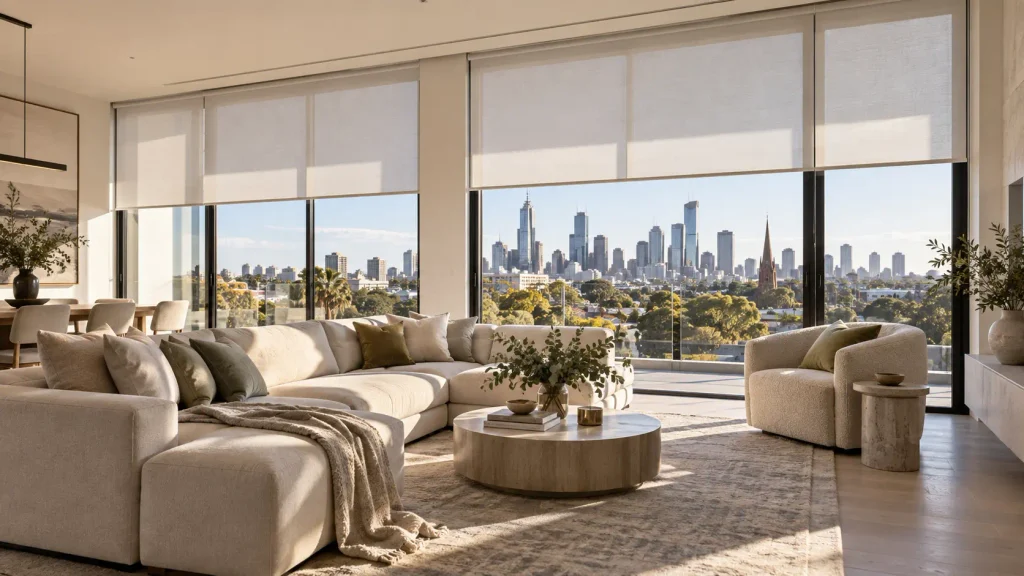
For homeowners searching for custom blinds Melbourne, the biggest advantage is not simply having more colours to choose from. The real value sits in fit, performance, durability and design control.
A blind covers one of the most important surfaces in the room: the window. That means it affects light, privacy, heat, glare, street appeal and interior proportion every day.
Cheap ready-made blinds may look acceptable in the packet, but Melbourne homes rarely follow standard sizing. Heritage frames can sit out of square. New builds can have wide architectural glazing. Apartments often use aluminium frames with shallow reveals. Renovations may combine old timber windows with new sliding doors.
A standard blind cannot solve all those conditions properly.
Complete Blinds has more than 35 years of local window furnishing experience and manufactures directly from our Ringwood factory hub. That gives Melbourne homeowners, builders and designers access to precision-made blinds, shutters and curtains built for the actual window opening, not a generic size chart.
Why Off-the-Shelf Blinds Fail in Melbourne Homes
Off-the-shelf blinds usually fail for one simple reason: they are made for average windows, not real ones.
A store-bought blind may come in a limited width and drop. If the size is slightly wrong, the installer has to compromise. That usually means wider edge gaps, poor overlap, uneven hanging or a finish that looks temporary.
Those small compromises create bigger problems.
Light leakage is one of the most common issues. Even if the fabric is blockout, light can still leak around the edges. This creates the “halo effect”, where sunlight or streetlight glows around the blind and reflects across the wall or ceiling.
That becomes frustrating in bedrooms, nurseries and media rooms.
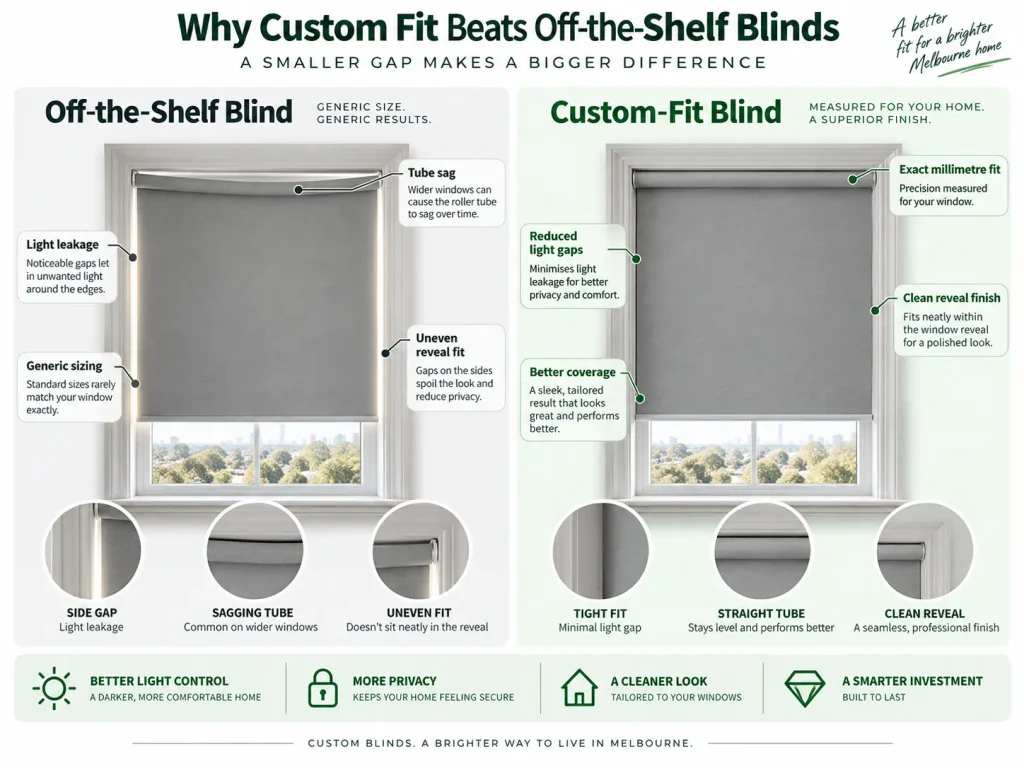
Wide windows create another issue. Low-quality roller tubes can sag across larger spans. Once the tube bends, the fabric may track poorly, ripple, or roll unevenly. Over time, the blind starts to look tired and may become harder to operate.
Fabric quality also matters in Melbourne’s climate.
Cheap imported fabrics may fade quickly under harsh UV exposure. They may not handle heat, moisture, or daily use well. Some low-cost mechanisms also wear out faster, especially in homes where blinds open and close several times a day.
By contrast, custom blinds in Melbourne are measured and manufactured to suit the property. That means better coverage, cleaner operation, stronger hardware and a more resolved interior finish.
Custom sizing also helps with uneven reveals.
Many Victorian heritage homes have timber frames that have shifted over decades. Newer builds can also have slight settlement or plaster variation around openings. A custom-made blind allows for those site realities before production starts.
That is the difference between covering a window and fitting it properly.
Custom Blinds Melbourne and the Four-Seasons-in-One-Day Climate
Melbourne weather is hard on window furnishings.
Cold winter mornings, hot northerly winds, strong western sun, coastal salt air and sudden temperature shifts can all affect how a room performs. A good blind needs to manage more than privacy.
It needs to help control heat, glare and comfort.
Windows can lose a large portion of indoor heat during winter. In summer, they can also allow major heat gain, especially through exposed glass. That means the right blind can affect how often you run heating and cooling.
North-facing windows usually need flexible solar control. In winter, they can bring useful warmth. In summer, they may need shading to prevent overheating.
West-facing windows need stronger protection. Afternoon sun can be harsh, low and difficult to manage. In these rooms, sunscreen rollers, blockout layers, awnings or lined curtains may be needed.
South-facing rooms often feel colder and darker. Honeycomb blinds, lined curtains or Roman blinds can help improve comfort by adding an insulating layer.
Coastal homes around bayside Melbourne and the Mornington Peninsula need materials that can handle UV, humidity and salt air. Hardware selection becomes especially important. Aluminium components, durable fabrics and quality mechanisms help prevent early wear.
Condensation also deserves attention.
Bedrooms with poor ventilation and cold glass can develop moisture on the inside of the window. The right window furnishing can improve comfort, but airflow still needs to be managed. This is why product selection should consider room use, orientation and ventilation, not just colour.
A local manufacturer understands those conditions better than a distant reseller.
Complete Blinds manufactures custom window blinds in Ringwood for homes across Melbourne, so the advice can match the climate, not just the catalogue.
The Complete Custom Blind Style Shootout
Different blind styles solve different design and performance problems.
The best custom blinds Melbourne homeowners choose usually depend on four questions:
- How much light control do you need?
- Does the room need thermal insulation?
- Should the blind disappear or become a design feature?
- How often will the blind be operated?
Below is a practical breakdown of the main styles.
Blockout and Sunscreen Roller Blinds
Roller blinds remain one of the most popular options for indoor blinds Melbourne homes.
They are clean, practical and versatile. A single roller blind can provide privacy, glare control or blockout performance depending on the fabric. A dual roller system combines two fabrics on slimline double brackets, usually one sunscreen layer and one blockout layer.
Sunscreen fabric works well during the day. It reduces glare while preserving outward view, making it useful for living rooms, home offices and north-facing windows.
Blockout fabric provides privacy and room darkening. It suits bedrooms, nurseries, media rooms and street-facing spaces.
For stronger performance, blockout roller blinds can be paired with pelmets, side channels or curtains. This helps reduce edge light leakage and improves the finished look.
Roller blinds work especially well in modern homes where the goal is clean, minimal coverage without visual bulk.
Honeycomb and Cellular Blinds
Honeycomb blinds are the thermal specialists of the custom blind world.
Their cellular structure creates small hexagonal air pockets that trap still air. This improves insulation around the window and helps reduce heat transfer.
For cold Melbourne bedrooms or south-facing rooms, honeycomb blinds can make a noticeable comfort difference. They also suit older homes with single-glazed windows, where replacing the glass may be too expensive or restricted by heritage rules.
Honeycomb blinds can be light-filtering or blockout. Top-down bottom-up operation can also help manage privacy and daylight, especially in bathrooms, bedrooms and street-facing rooms.
They are one of the best choices for homeowners who want thermal performance without a heavy visual style.
Roman Blinds
Roman blinds bring softness and structure.
Instead of rolling onto a tube, the fabric folds upward in horizontal sections. This creates a more decorative finish and suits rooms where the window should feel designed, not purely functional.
Roman blinds work beautifully in formal living rooms, dining rooms, master bedrooms and heritage homes. They can use textured fabrics, linen blends, warm neutrals or patterned textiles to add personality.
Because they use more fabric than roller blinds, Roman blinds can also add a sense of warmth. With the right lining, they support privacy and insulation.
However, they are not ideal for every space. Kitchens, bathrooms and laundries may expose fabric to steam, grease or moisture. In those rooms, roller blinds, shutters or moisture-resistant options usually perform better.
Venetian Blinds: Timber and Aluminium
Venetian blinds provide precise light control.
Their adjustable slats allow homeowners to direct daylight upward, downward or away from screens. This makes them useful for home offices, studies, kitchens and rooms where glare changes throughout the day.
Timber Venetians suit warm interiors, heritage rooms and spaces with natural finishes. Aluminium Venetians create a sharper, more technical look and suit offices, apartments and utility areas.
They also work well in rooms where privacy needs to shift during the day.
For example, a street-facing study may need daylight without direct visibility from outside. A Venetian blind can angle light into the room while obscuring the view.
The main consideration is cleaning. Slats collect dust, so they require more regular maintenance than flat roller blinds.
Motorised and Smart Automation
Automation has moved from luxury upgrade to practical design feature.
Large sliding doors, high windows, bedrooms and open-plan living areas all benefit from smooth motorised operation. Instead of pulling a chain across several blinds, homeowners can use a remote, wall switch, timer, app or smart home system.
Motorised blinds are especially useful where blinds need to move daily for heat control.
West-facing windows can close automatically before harsh afternoon sun enters the room. Bedrooms can open gradually in the morning. Living spaces can switch between privacy and daylight settings.
Systems such as Somfy® and Automate® can suit hard-wired, battery-powered or solar-rechargeable configurations, depending on the project.
For new builds, the best time to plan automation is before plaster and electrical work are complete. That allows cleaner wiring, better switch placement and neater integration with the building.
Layered Window Treatments
The most premium Melbourne interiors rarely rely on one product alone.
Layering gives the strongest combination of function and softness. A roller blind can control glare or blockout. A sheer curtain can filter daylight and add movement. A lined curtain can improve privacy, insulation and acoustics.
This is where modern curtains in Melbourne pair beautifully with custom roller blinds.
A popular setup includes dual rollers or blockout rollers behind S-Fold sheers. The blind handles performance, while the curtain softens the architecture.
For a more architectural alternative, Plantation Shutters create a full-frame finish with strong privacy, airflow and light control. They suit bathrooms, street-facing rooms, Hamptons interiors, coastal homes and premium renovations.
Layered window treatments work best when the track, pelmet, fabric and hardware are planned together.
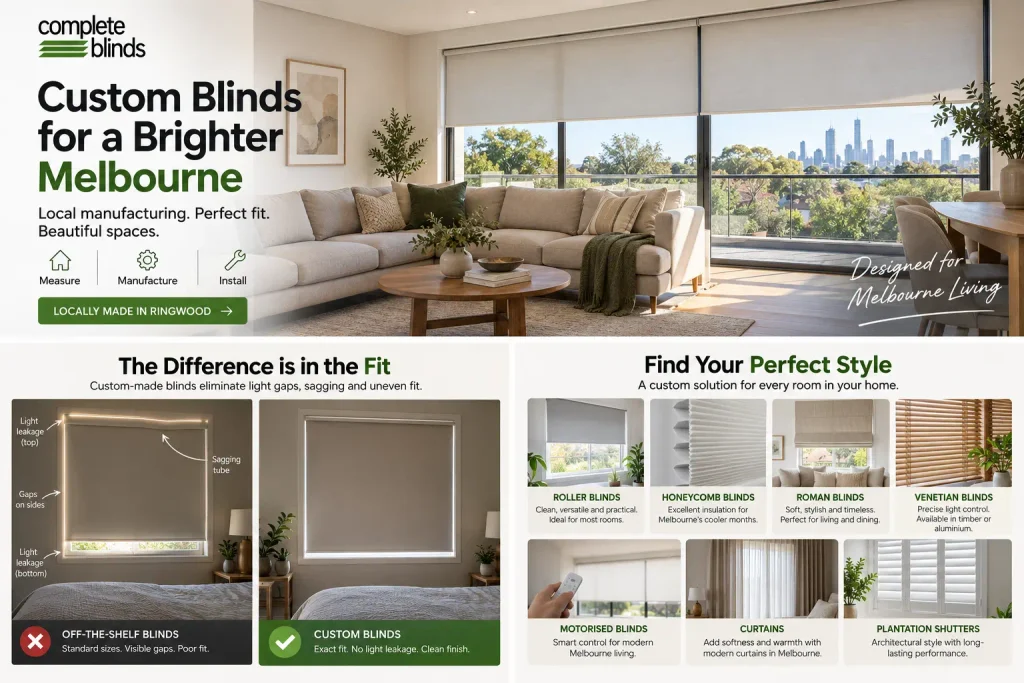
Comparison Matrix: Custom Blind Styles Head-to-Head
| Blind Style | Thermal Insulation Performance | Light Control Flexibility | Relative Cost Tier | Best Melbourne Room Application |
|---|---|---|---|---|
| Roller Blinds | Moderate, higher with pelmets or layered curtains | High with sunscreen, blockout or dual roller options | Entry to mid | Bedrooms, living rooms, offices, apartments |
| Honeycomb Blinds | Very high due to trapped air pockets | Moderate to high depending on fabric and operation | Mid to premium | Cold bedrooms, single-glazed rooms, nurseries |
| Roman Blinds | Good with lining and heavier fabric | Moderate | Mid to premium | Formal living, dining, master bedrooms, heritage homes |
| Timber Venetians | Moderate | Very high due to adjustable slats | Mid | Studies, offices, bedrooms, warm interiors |
| Aluminium Venetians | Low to moderate | Very high | Entry to mid | Kitchens, offices, apartments, utility rooms |
| Motorised Roller Blinds | Moderate to high depending on fabric and fit | Very high with automation schedules | Premium | Large glazing, bedrooms, high windows, smart homes |
| Plantation Shutters | High when tightly fitted | High with louvre adjustment | Premium | Bathrooms, street-facing rooms, coastal and Hamptons homes |
| Roller + S-Fold Curtain Layer | High with lined curtains and correct track placement | Very high | Premium | Living rooms, bedrooms, luxury renovations |
Factory Direct Blinds Melbourne: The Ringwood Process
Buying custom blinds should feel clear, not confusing.
Complete Blinds follows a practical process that helps homeowners, renovators, designers and builders move from idea to installation with confidence.
Step 1: In-Home Laser Measurement and Fabric Consultation
The first step is an in-home consultation.
A design consultant visits the property, checks the windows, reviews the room conditions and takes accurate measurements. This is where many important decisions happen.
The consultant can assess:
- Window reveal depth
- Architrave shape
- Wall and ceiling lines
- Room orientation
- Privacy needs
- Heat and glare issues
- Interior colour palette
- Furniture placement
- Operation preferences
- Child safety requirements
Fabric samples can be viewed in the actual home, under real Melbourne light. That is important because colours shift dramatically from showroom lighting to a west-facing living room or shaded bedroom.
A warm white fabric may look perfect in one room and too yellow in another. A grey blind may look soft in the sample book but blue against your wall paint.
Seeing samples on site reduces that risk.
Step 2: Ringwood Factory Custom Production
After measurement and selection, the order moves into factory production.
Complete Blinds manufactures from our Ringwood hub, allowing stronger control over sizing, cutting, assembly and quality checking.
Every product is made to suit the actual window dimensions. That matters for non-square reveals, older heritage frames, large openings and modern architectural glazing.
Factory-direct production also allows better coordination across multiple products.
For example, a project may include roller blinds in bedrooms, sheers in the living area, shutters in bathrooms and motorised blinds over large sliding doors. Local production helps manage consistency, lead times and project staging.
It also supports customisation across:
- Fabric widths
- Pelmet sizing
- Track selection
- Chain or motor control
- Base rail finish
- Bracket colour
- Shutter configuration
- Curtain fullness
- Hardware matching
This is where custom window blinds Ringwood manufacturing becomes a genuine advantage.
Step 3: Professional Installation by Local Fitters
A custom blind only performs properly if it is installed correctly.
Professional installation ensures the product sits square, operates smoothly and provides the intended coverage. Installers can also adjust brackets, align tracks, secure tension devices and confirm safe operation.
This matters for child safety, light control and durability.
A poorly installed blind can roll unevenly, leave unwanted gaps, damage the wall, or fail prematurely. With larger blinds and motorised systems, correct installation becomes even more important.
Local installers also understand Melbourne housing conditions.
They know how to handle older plaster, uneven reveals, aluminium frames, tiled areas, high windows and multi-product installations.
The final result should look integrated with the home rather than added as an afterthought.
Why Best Custom Blinds Melbourne Projects Start Early
For new builds and major renovations, window furnishings should not wait until the last week.
Early planning allows better outcomes.
Builders can allow space for recessed tracks, concealed pelmets, motor wiring and curtain stack. Interior designers can coordinate fabric with flooring, paint, joinery and furniture. Homeowners can make better decisions before the budget tightens at the end of the build.
Late decisions often create compromises.
A curtain may need to sit lower than intended. A pelmet may not fit. Motor cables may become visible. A roller blind may sit outside the reveal because nobody allowed enough depth.
The best custom blinds Melbourne projects consider window furnishings during design, not after painting.
That approach creates cleaner lines, better function and stronger long-term value.
Frequently Asked Questions
Custom blinds cost more than store-bought blinds because they are measured, manufactured and fitted to the exact window. However, they usually provide better durability, light control, thermal performance and appearance.
Honeycomb blinds are one of the strongest options for winter insulation because their cellular pockets trap still air. Lined curtains, shutters and pelmet-sealed rollers can also improve comfort.
Timing depends on product type, fabric availability, order size and installation complexity. Simple roller blinds are usually faster, while shutters, curtains and motorised systems may take longer.
Sometimes. It depends on the tube, brackets, blind size, fabric weight and available power options. A technician can assess whether retrofitting a motor is practical or whether replacement is better.
A factory-direct manufacturer controls measurement, production quality, custom sizing, hardware selection and installation support. This reduces compromise and gives better fitment than relying on generic imported products.
Final Buyer Recommendation
The best custom blinds Melbourne homeowners choose are not always the most expensive.
They are the blinds that suit the window, room, climate and architecture.
Use roller blinds where clean function, privacy and glare control matter. Choose honeycomb blinds where winter warmth and insulation are priorities. Select Roman blinds where the room needs textile softness. Use Venetians where adjustable light control matters. Add motorisation where windows are large, high or frequently used. Layer curtains where the interior needs warmth, movement and a premium finish.
For bathrooms, coastal homes and street-facing windows, Plantation Shutters can provide long-lasting structure and privacy.
The common thread is custom fit.
Off-the-shelf blinds often leave gaps, sag on wide windows, use weaker mechanisms and limit design control. Custom-made window furnishings solve those problems at the measurement stage.
Complete Blinds brings more than 35 years of Melbourne experience to that process, with factory-direct manufacturing from our Ringwood hub and professional installation across local suburbs.
If you want blinds that look right, operate smoothly and perform properly through Melbourne’s changing seasons, start with a custom solution built for your actual home.
Complete Blinds can help you choose the right blinds, curtains or shutters for your windows, style, budget and thermal needs. From our Ringwood factory, we measure, manufacture and install custom window furnishings across Melbourne with the precision needed for a clean, long-lasting result.
To discuss your project, book a service enquiry below and our team will help you take the next step.


