


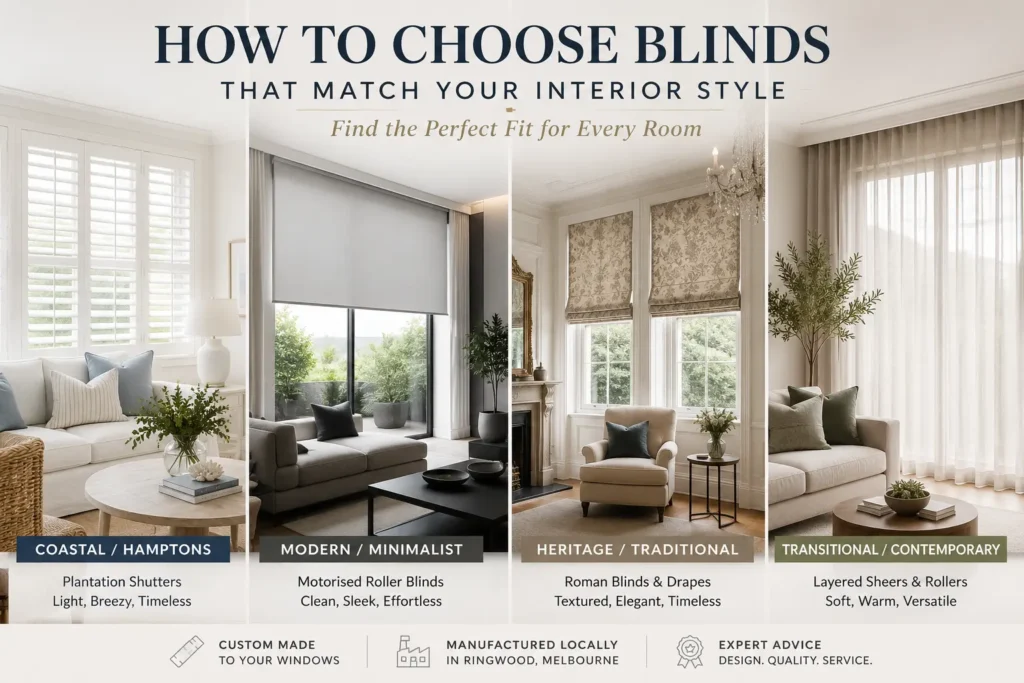
Quick Verdict: The golden rule is simple: choose wide-louvre plantation shutters for Hamptons and Coastal homes, flush-mounted motorised roller blinds for ultra-modern minimalist spaces, textured Roman blinds for Heritage and Traditional rooms, and layered S-Fold sheers to add organic warmth to contemporary builds. Match fabric weight, colour and hardware to architecture before choosing price, pattern or trend quality.
Window furnishings cover some of the largest vertical surfaces in a room.
That makes them far more important than many homeowners realise. A sofa can change the mood of a space. A rug can ground it. But blinds, curtains and shutters frame the architecture itself. They sit directly against the windows, walls, architraves and ceiling lines.
Choose the wrong style, and the whole room can feel off.
A modern home can suddenly look dated. A heritage room can feel cheap. A coastal interior can lose its softness. An industrial apartment can look unfinished rather than intentional.
The best window furnishings do not simply cover glass. They respect proportion, texture, light direction and the style of the home.
This guide explains how to choose blinds that match your interior style, with practical recommendations for Melbourne homes, renovations and architectural builds.
Complete Blinds manufactures custom blinds, curtains and shutters from our Ringwood facility. That means we do not force homeowners into off-the-shelf compromises. We can match fabric textures, pelmet colours, track finishes and hardware details to your actual paint, plaster, flooring and interior palette.
That level of customisation matters because style lives in the details.
The Hamptons and Coastal Aesthetic
The Hamptons and Coastal look suits Melbourne’s bayside suburbs, Mornington Peninsula homes and light-filled family renovations.
This style relies on fresh whites, soft neutrals, natural light, timber flooring, linen upholstery and a relaxed sense of order. The room should feel breezy, calm and well proportioned rather than overly decorated.
For this aesthetic, Plantation Shutters are the strongest choice.
Crisp white shutters suit Coastal and Hamptons interiors because they add structure without visual heaviness. They also echo the clean architectural detailing often found in weatherboard homes, beachside renovations and family homes with wide windows.
The best Hamptons-style shutters usually use wider louvres.
An 89mm louvre creates a cleaner, more premium look than narrow blades. It also gives a better view through the window when open. Hidden tilt rods can make the shutter feel more refined because they remove the vertical control bar from the front face.
That creates a cleaner sightline.
White remains the safest shutter colour for this style, but the exact white matters. A bright blue-white can look too sharp against warm walls. A creamy white can look yellow beside cooler trims. The right choice depends on your wall colour, skirting, architraves and natural light.
Coastal homes also benefit from soft sheers.
Light-filtering sheer curtains can sit beside shutters in bedrooms, living rooms or large sliding door areas. They add movement and softness, especially where the room includes rattan, oak, linen, stone or brushed brass.
Avoid heavy, dark or overly glossy fabrics in Coastal interiors. They can fight the relaxed mood and make the room feel formal.
The goal is simple: filtered light, crisp detail and softness without clutter.
Ultra-Modern and Minimalist Homes
Ultra-modern homes need invisible performance.
This style appears often in new architectural builds around Box Hill, Glen Waverley, Doncaster, Ringwood, Balwyn and other Melbourne suburbs with large-format glazing and clean contemporary lines.
The interior language usually includes square-set plaster, aluminium windows, polished concrete, engineered timber, slimline cabinetry and open-plan spaces. The window furnishing should not compete with that architecture.
It should support it quietly.
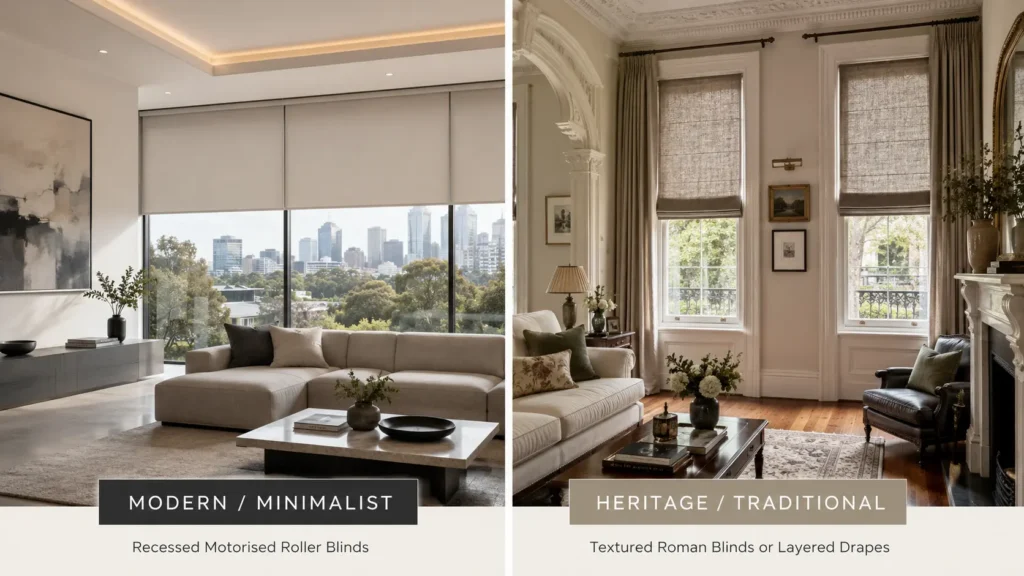
For blinds for modern homes Melbourne, the strongest option is usually a recessed roller blind system with clean fabric and minimal visible hardware.
Hard-wired motorised blinds suit this style particularly well. They remove the need for chains, reduce clutter and allow blinds to operate through wall switches, remotes, apps or smart home systems.
In minimalist homes, hardware should almost disappear.
A roller blind concealed inside a ceiling recess or pelmet can drop cleanly when needed and vanish when raised. This gives the room privacy, glare control and heat management without breaking the ceiling line.
Sleek blockout roller blinds are ideal for bedrooms, media rooms and west-facing living spaces. They provide strong light control while maintaining a crisp architectural finish.
Colour selection should stay restrained.
Warm white, soft grey, stone, charcoal and muted taupe all work well, depending on the wall colour and flooring. Avoid busy patterns. Minimalist window furnishings should rely on proportion, fabric quality and precision rather than decoration.
Texture still matters, though.
A flat fabric can suit a very sharp home, but many minimalist interiors now need a softer layer to avoid feeling cold. This is where sheer curtains, recessed tracks and warm neutral fabrics can balance the architecture.
Minimalism works best when the window treatment looks intentional, not empty.
Industrial and Warehouse Conversions
Industrial interiors have a different rhythm.
They suit inner-city Melbourne apartments, converted warehouses, loft-style homes and renovations with exposed structure. You often see exposed brick, steel beams, concrete floors, matte black metal, large windows and raw timber.
This style can handle stronger contrast.
Industrial roller blinds work well because they maintain the clean vertical plane of the window without adding softness that feels out of place. Dark charcoal, black, graphite and deep grey fabrics all suit this look.
A darker roller blind can frame black aluminium windows beautifully.
Exposed anodised aluminium base rails can also work in industrial settings. In softer homes, exposed hardware may look too technical. In industrial interiors, it can strengthen the raw, structural character.
This is one of the few styles where visible mechanics can feel appropriate.
Dark timber Venetians can also suit industrial homes, particularly where the interior includes reclaimed timber, leather furniture or black steel shelving. The horizontal lines add depth while still feeling practical.
However, balance is important.
Too much black can make the room feel heavy, especially in apartments with limited natural light. If the walls and floors are already dark, consider a charcoal or warm grey blind rather than pure black.
For industrial homes with large glass, roller blinds usually outperform Roman blinds. Their cleaner profile suits the architecture better, and motorisation can help manage high windows or hard-to-reach glazing.
The ideal result should feel raw but controlled.
Classic Heritage and Period Homes
Melbourne has many Victorian, Edwardian and interwar homes where the window treatment must respect original detail.
Suburbs such as Toorak, Camberwell, Kew, Hawthorn, Canterbury, Carlton and parts of Brunswick often include ornate architraves, high ceilings, ceiling roses, fireplaces, timber floors and decorative plasterwork.
These homes need warmth and proportion.
The best blinds for heritage homes usually include textured Roman blinds, layered curtains or soft drapery. A plain roller blind can work in secondary rooms, but it may feel too flat in formal areas.
Roman blinds suit heritage interiors because they provide structure without hiding the window frame completely. Their horizontal folds create softness while still feeling tailored.
Fabric choice matters.
Linen blends, textured weaves, herringbone effects, soft jacquards and warm neutrals can all work well. Avoid overly shiny fabrics, harsh whites or ultra-modern greys that make the room feel disconnected from its architecture.
In formal living rooms and dining rooms, heavy drapes can honour the scale of the room. High ceilings need vertical weight. Full-length curtains can make tall windows feel grand without looking old-fashioned, especially when the fabric has a clean contemporary texture.
The goal is not to recreate a museum.
A heritage home should feel current, but not stripped of character. Window furnishings need to bridge old and new.
For example, a Victorian bedroom may suit a textured Roman blind in oatmeal linen with a blockout lining. A front sitting room may suit layered sheers and lined curtains. A rear extension may use roller blinds or S-Fold sheers to connect with the newer architecture.
A mixed approach often works best in renovated period homes.
Respect the original rooms. Simplify the new spaces.
The Transitional Style: The Safe Bet for Renovations
Transitional styling has become one of the most popular choices for Melbourne renovations.
It blends traditional warmth with modern clean lines. The result feels comfortable, refined and flexible. It suits family homes, extensions, townhouses and renovations where the homeowner does not want a style that feels too trendy.
This is the safest design direction for many people because it does not push too far into one category.
The ultimate transitional window furnishing setup combines practical roller blinds with soft modern curtains in Melbourne.
A roller blind provides privacy, blockout and glare control. An S-Fold sheer adds softness, texture and movement. Together, they create a layered system that works across bedrooms, living rooms and open-plan spaces.
Warm earth tones suit this style beautifully.
Oatmeal, stone, clay, sage, mushroom, soft taupe and warm white all work well. These colours feel calmer than stark white and more current than cool grey.
S-Fold sheers are especially useful in contemporary builds that feel too hard.
Large glass doors, tiled floors, stone benchtops and white walls can make a room echo or feel unfinished. A soft sheer layer can immediately add warmth without making the home feel traditional.
Transitional styling also gives you flexibility across the house.
You might use shutters on the front facade for kerb appeal, roller blinds in bedrooms for function, and sheers in the living area for softness. The key is to keep the palette connected.
Hardware should also remain consistent.
Track colours, pelmets, brackets, chains, base rails and motor controls should relate to the surrounding plaster, window frames or wall colour.
The best transitional interiors look simple because the details have been carefully controlled.
Colour and Texture Matrix
Use this quick guide to match blind fabrics and materials to common interior palettes.
| Wall Paint Tone | Best Blind or Curtain Direction | Recommended Texture | Best Interior Style |
|---|---|---|---|
| Warm White | White shutters, oatmeal sheers, soft taupe roller blinds | Linen, matte shutter finish, woven neutrals | Coastal, Hamptons, Transitional |
| Cool White | Soft grey roller blinds, crisp white shutters, pale sheers | Smooth roller fabric, light-filtering sheers | Minimalist, Modern, Apartment |
| Cool Grey | Charcoal rollers, black hardware, graphite Venetians | Matte, structured, low-sheen finishes | Industrial, Contemporary |
| Beige or Stone | Linen Roman blinds, warm sheers, clay-toned curtains | Slub linen, textured weave, soft blockout lining | Heritage, Transitional, Organic Modern |
| Dark Mood Colours | Black rollers, deep green Roman blinds, bronze or black hardware | Heavy woven fabric, velvet-look textures, timber Venetians | Industrial, Luxe, Dramatic Contemporary |
| Soft Sage or Green | Warm white shutters, oatmeal sheers, natural Roman blinds | Linen blends, organic woven textures | Coastal, Heritage, Relaxed Modern |
| Terracotta or Clay | Neutral sheers, warm taupe rollers, timber Venetians | Natural fibres, matte finishes, timber grain | Mediterranean, Rustic Modern, Earthy Contemporary |
This matrix should guide the first decision, not replace an in-home consultation.
Colours change dramatically under Melbourne light. A fabric that looks warm in a showroom may appear cooler in a south-facing room. A white shutter that suits one home may clash with another home’s trim.
Always check samples against the actual wall colour, flooring and daylight before making the final choice.
The Factory-Direct Styling Advantage
Custom blinds Ringwood searches usually come from homeowners who want more control than a standard retail option can provide.
That control is exactly where Complete Blinds offers a major advantage.
Because we manufacture through our Ringwood facility, we can design window furnishings around the home rather than forcing the home to adapt to generic products.
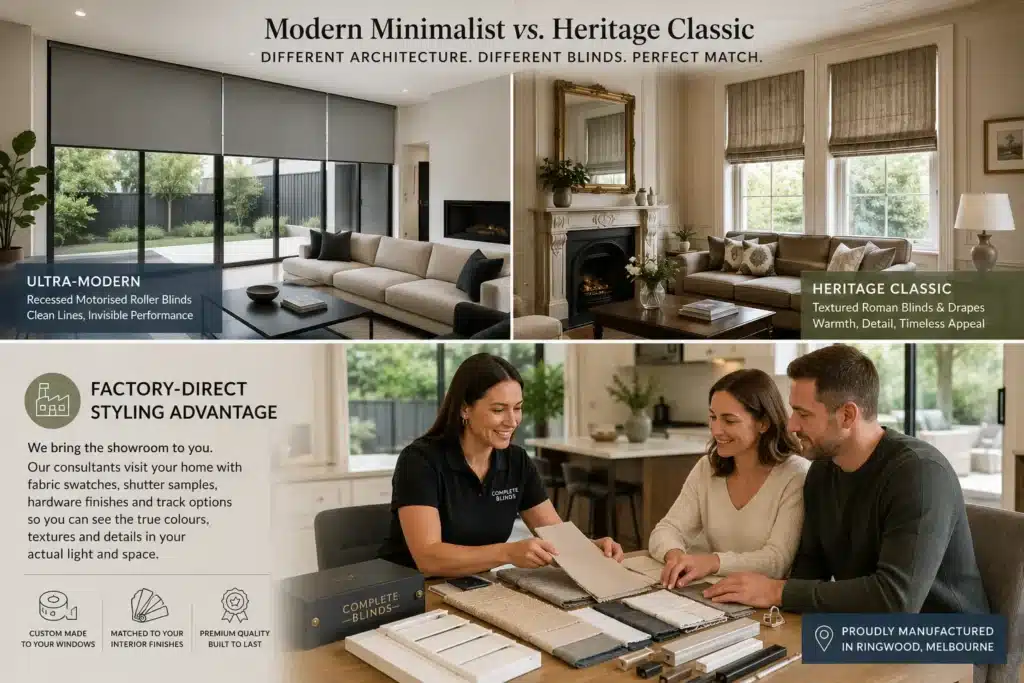
Our design consultants can bring fabric swatches, shutter samples, hardware finishes and track options directly to your home. This allows you to see how each material responds to your actual light, wall colour, flooring and furniture.
That matters.
Showroom lighting cannot replicate the afternoon sun in a west-facing living room. It cannot show how a sheer will look beside your exact paint colour. It cannot reveal whether a shutter white will match your architraves.
In-home selection gives a far more accurate result.
Custom manufacturing also allows better control over technical details. We can match pelmet colours to plaster finishes, select track styles that suit ceiling lines, and recommend fabric weights that suit the room’s proportions.
For modern homes, that might mean flush tracks, concealed motors and minimal base rails.
For heritage homes, it might mean fabric softness, lining selection and careful respect for architraves.
For coastal homes, it may involve wide-louvre shutters, light-filtering sheers and whites that sit cleanly beside trims.
Off-the-shelf blinds often solve only the measurement problem. Custom-made window furnishings solve the design problem as well.
FAQs: Choosing Blinds to Match Your Interior Style
The front facade should look consistent for kerb appeal, especially from the street. Inside the home, blinds can vary by room function. Bedrooms may need blockout blinds, living areas may suit sheers, and bathrooms may need shutters. Keep colours and hardware coordinated so the home still feels connected.
Blinds usually look best when they relate to the wall colour, window frame or trim. This creates a cleaner architectural look. Flooring can influence warmth and texture, but matching blinds directly to the floor can make the room feel heavy. Use the floor as a secondary guide.
Light-coloured roller blinds, ceiling-mounted sheers and shutters with wide louvres can make a room feel larger. Avoid bulky fabrics on small windows. For low ceilings, mount curtains higher and use vertical fabric drops to draw the eye upward.
Vertical blinds are less popular in high-end interiors, but they are not completely gone. They can still work for some rental properties, offices and large sliding doors. For a more current residential look, many homeowners now choose S-Fold sheers, roller blinds or panel-style solutions instead.
Compare shutter samples against your wall paint, skirting, architraves and window frames in natural light. Warm whites suit creamier interiors, while cooler whites suit crisp modern schemes. Avoid choosing a white from a catalogue alone, because undertones become obvious once installed.
Final Styling Recommendation
The best way to choose blinds that match your interior style is to start with the architecture.
A Hamptons or Coastal home usually needs wide-louvre shutters, soft whites and light-filtering fabric.
A modern minimalist home needs clean roller blinds, hidden tracks, motorisation and quiet detailing.
An industrial apartment can handle charcoal fabrics, black hardware and exposed aluminium finishes.
A heritage home needs textured Roman blinds, layered drapery and fabric that respects classical proportions.
A transitional renovation usually benefits from the most flexible combination: roller blinds for function, S-Fold sheers for softness and warm neutral tones for long-term appeal.
Complete Blinds helps Melbourne homeowners bring these choices together through custom manufacturing from our Ringwood factory. Our team can match fabric, colour, track style, pelmets and hardware to the actual home, not a generic display board.
That is how window furnishings become part of the interior design rather than an afterthought.


